






What's Happening?
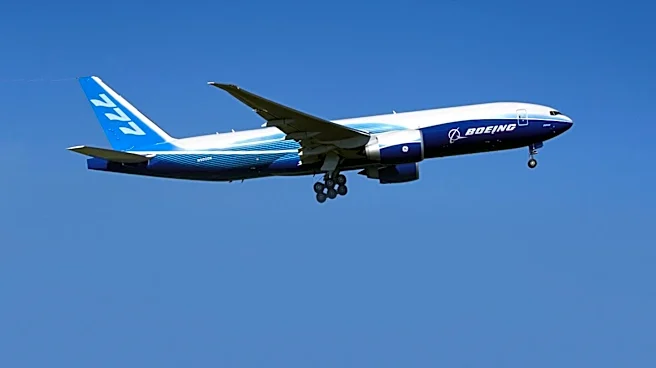
Boeing's seventh 777-9 aircraft has successfully completed its first flight, marking a significant milestone in the aircraft's development. The flight, which lasted approximately three hours, was conducted over Washington State, Idaho, and Oregon. The aircraft is
part of Boeing's efforts to conduct extended operations (ETOPS) and function and reliability testing. The flight tested the airplane's systems and structures, with onboard monitoring by a team of systems operators and analysts. The 777-9 is part of Boeing's 777X family, designed to continue the legacy of long-haul, twin-engine efficiency.
Why It's Important?
The successful first flight of the seventh 777-9 is crucial for Boeing as it progresses towards obtaining regulatory approval for ETOPS, which will allow the aircraft to operate extended distances from suitable landing airports. This capability is essential for opening more direct routes, saving time and fuel for airlines. The 777-9's development is part of Boeing's strategy to offer advanced, efficient aircraft that meet the evolving needs of the aviation industry. The aircraft's certification and eventual entry into service are expected to enhance Boeing's competitive position in the widebody aircraft market.
What's Next?
Boeing will continue with the certification process for the 777-9, which includes extensive analysis, lab tests, engine tests, and proving flights. These steps are necessary to demonstrate the aircraft's ability to safely and reliably conduct trans-oceanic routes. The company aims to complete the certification and begin deliveries by 2027. As the 777-9 program progresses, Boeing will work closely with regulatory authorities and airline customers to ensure the aircraft meets all safety and performance standards.