




What's Happening?
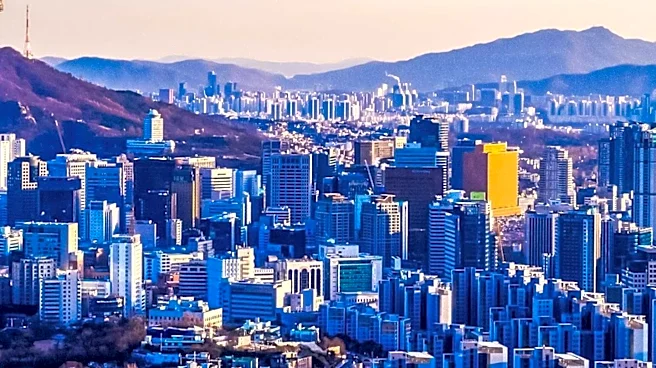
Daniel Dae Kim, known for his role as Jin-Soo Kwon in "Lost," has been granted honorary Seoul citizenship by the Seoul Metropolitan Government. This recognition comes in light of his contributions to an Amazon Prime Video series currently being filmed
in Seoul. Kim has had a diverse career since his time on "Lost," starring in "Hawaii Five-0" and appearing in "New Amsterdam," as well as films like "Divergent," "Hellboy," and "Always Be My Maybe." He also produced and starred in the CNN Original Series "K-Everything," which explores South Korean culture. In his personal life, Kim is married to Mia Rhee, and they have two sons. The honorary citizenship highlights his ongoing connection to and promotion of Korean culture through his professional endeavors.
Why It's Important?
This honorary citizenship for Daniel Dae Kim underscores the growing global influence of South Korean culture, often referred to as the 'Korean Wave' or 'Hallyu.' Kim's involvement in a major Amazon Prime Video series filmed in Seoul, coupled with his CNN Original Series "K-Everything," significantly boosts the visibility of South Korea's cultural landscape on an international stage. For the U.S. entertainment industry, this signifies an increasing trend of collaboration and cross-cultural productions, potentially opening new avenues for American actors and production companies in the Korean market. It also highlights the economic and cultural benefits that can arise from such international partnerships, attracting tourism and investment to Seoul while enriching global media content. This recognition of a U.S.-based actor by a foreign government for cultural contributions reflects the interconnectedness of global entertainment and the power of media to bridge cultural divides.
What's Next?
Following this recognition, Daniel Dae Kim is likely to continue his work in promoting South Korean culture, potentially leading to more collaborative projects between U.S. and South Korean entertainment industries. The Amazon Prime Video series being filmed in Seoul, for which he received the honor, will likely draw increased attention upon its release, further showcasing Seoul as a viable and attractive location for international productions. This could encourage other U.S. actors and filmmakers to explore opportunities in South Korea, fostering a deeper exchange of talent and resources. Additionally, Kim's role as a cultural ambassador could lead to further initiatives aimed at strengthening cultural ties between the U.S. and South Korea, potentially through educational programs or cultural exchange events. The success of such ventures could pave the way for more diverse and globally-minded content in the U.S. media landscape.
Beyond the Headlines
The honorary Seoul citizenship granted to Daniel Dae Kim extends beyond a mere accolade; it symbolizes the increasing recognition of cultural diplomacy through entertainment. In an era where soft power plays a crucial role in international relations, figures like Kim, who bridge cultural gaps through their work, become invaluable. This event highlights the ethical dimension of cultural representation, as Kim, an American actor of Korean descent, actively engages with and promotes his heritage, offering authentic portrayals and insights into South Korean culture. It also points to a long-term shift in the global entertainment industry, where content is becoming less geographically confined and more universally appealing. This trend could lead to a more inclusive and diverse media landscape, challenging traditional narratives and fostering a deeper understanding and appreciation of different cultures among global audiences.