




What's Happening?
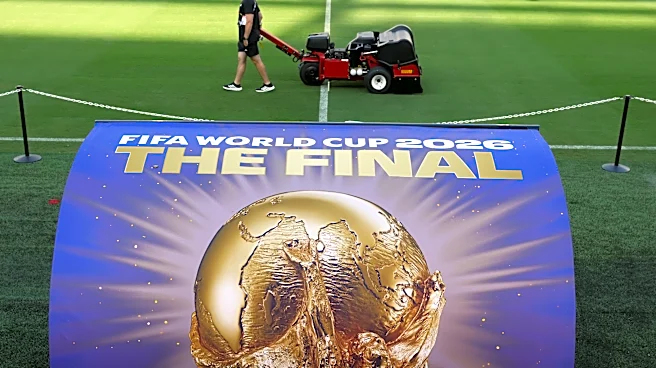
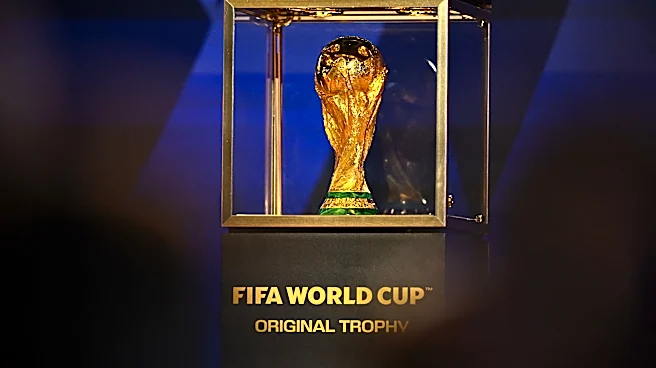
The FIFA World Cup trophy, designed by Italian sculptor Silvio Gazzaniga, has become an iconic symbol in the world of soccer. Created in response to FIFA's call for a new trophy design after Brazil's permanent acquisition of the original Jules Rimet Trophy
in 1970, Gazzaniga's design captures the essence of athletic struggle, fan jubilation, and victory. The trophy, featuring two figures spiraling towards an orb representing Earth, was first presented at the 1974 World Cup. Gazzaniga's son, Giorgio, recalls the design process and the trophy's debut, highlighting its transformation into a global icon. The original trophy is kept by FIFA, with winners receiving a gold-plated replica.
Why It's Important?
The World Cup trophy is not just a symbol of victory in soccer but also a representation of global unity and sportsmanship. Its design reflects the universal emotions associated with sports, transcending cultural and national boundaries. The trophy's continued use underscores its significance in the sporting world, serving as a testament to the enduring legacy of Gazzaniga's artistic vision. For FIFA, maintaining the trophy's design through at least 2038 ensures a consistent and recognizable symbol for the tournament, reinforcing its brand and historical continuity.
What's Next?
As the World Cup continues to evolve, the trophy remains a constant, symbolizing the pinnacle of achievement in soccer. Future tournaments will see the trophy presented to new champions, each adding to its storied history. FIFA's decision to retain the design through 2038 suggests a commitment to preserving the tradition and prestige associated with the trophy. This continuity may influence future design decisions for other sporting awards, emphasizing the importance of iconic symbols in sports.
Beyond the Headlines
The World Cup trophy's design also highlights the intersection of art and sports, showcasing how artistic expression can enhance the cultural significance of sporting events. Gazzaniga's work exemplifies how art can capture complex emotions and narratives, contributing to the broader cultural impact of sports. The trophy's legacy may inspire future collaborations between artists and sports organizations, fostering a deeper appreciation for the role of art in enhancing the sports experience.