



What's Happening?
Verde Colab, a flexible workspace and coworking brand, has announced the acquisition of HudsonDesk, a coworking and creative studio located in Guttenberg, New Jersey. This acquisition marks Verde Colab's expansion into North Jersey and the New York City
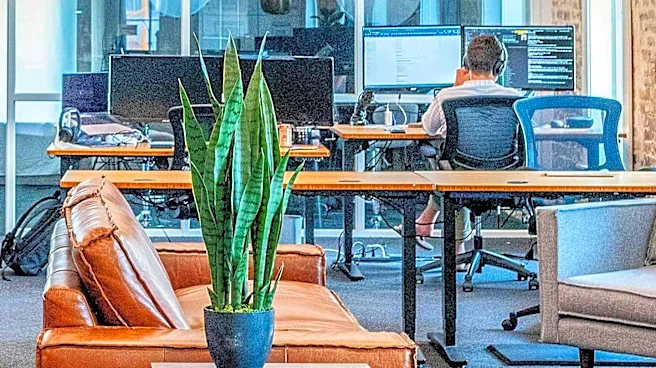
metropolitan market. HudsonDesk, situated at 7000 JFK Boulevard East, offers dedicated workspaces, semi-private team pods, a private office, a creative studio, call space, a kitchenette, an outdoor terrace, and garage parking, all with views of the Manhattan skyline. The founder of HudsonDesk, Hosam Hassan, will assist with the transition as the location integrates into the Verde Colab network. Christopher Heffernan, Founder of Verde Colab, stated that the acquisition is part of a broader vision to create boutique, design-forward workspaces that are connected to their communities, rather than adopting a one-size-fits-all coworking model. The Guttenberg location will cater to remote professionals, entrepreneurs, startups, small teams, and creatives in Hudson County, providing an alternative for those who desire proximity to New York City without the daily commute.
Why It's Important?
This acquisition is significant for the evolving landscape of flexible workspaces in the U.S., particularly in densely populated areas like the New York City metropolitan market. It highlights a growing demand for adaptable work environments that cater to remote professionals, entrepreneurs, and small businesses. The expansion of Verde Colab into Hudson County indicates a strategic move to capture a segment of the workforce seeking high-quality, localized coworking options. For individuals and small teams, this provides more accessible and aesthetically pleasing alternatives to traditional offices or working from home, potentially boosting productivity and creativity as suggested by the LinkedIn post from Anika Badola about the benefits of a change in environment. The focus on a 'boutique, design-forward' approach suggests a shift in the coworking industry towards more tailored and community-integrated spaces, moving away from generic models. This could lead to increased competition and innovation within the flexible workspace sector, benefiting users with more diverse and specialized options.
What's Next?
Following the acquisition, the Guttenberg space will transition to the Verde Colab brand. Further details regarding memberships, workspace options, creative studio bookings, and the official launch under the Verde Colab name are expected to be announced. Hosam Hassan, the founder of HudsonDesk, will play a role in facilitating this transition. Verde Colab's strategy of creating community-connected, design-forward workspaces suggests that future expansions or acquisitions will likely follow a similar model, focusing on integrating with local communities rather than imposing a standardized design. This approach could influence other coworking brands to consider more localized and specialized offerings. The success of this integration will likely be measured by the adoption rates among remote professionals and businesses in Hudson County, and how effectively Verde Colab can maintain the unique character of HudsonDesk while incorporating it into its broader brand.
Beyond the Headlines
The acquisition of HudsonDesk by Verde Colab reflects a broader trend in the U.S. towards decentralized work models and the increasing importance of work-life balance. As more companies embrace remote or hybrid work, the demand for high-quality, flexible workspaces outside of traditional central business districts is likely to continue growing. This development also underscores the psychological impact of environment on productivity and creativity, as highlighted by Anika Badola's personal experience. The emphasis on 'design-forward' and 'community-connected' spaces suggests a deeper understanding of user needs beyond just a desk and internet connection. It points to a future where workspaces are not just functional but also inspiring and integrated into the local fabric, fostering a sense of belonging and collaboration. This could lead to a re-evaluation of urban planning and commercial real estate development, with a greater focus on creating accessible, aesthetically pleasing, and community-oriented work hubs in suburban and exurban areas.