





What's Happening?
Financial experts are advising individuals to prioritize high-interest debt, such as credit cards and payday loans, as a primary strategy for debt repayment. This approach aims to minimize the total interest paid over time, making the repayment process
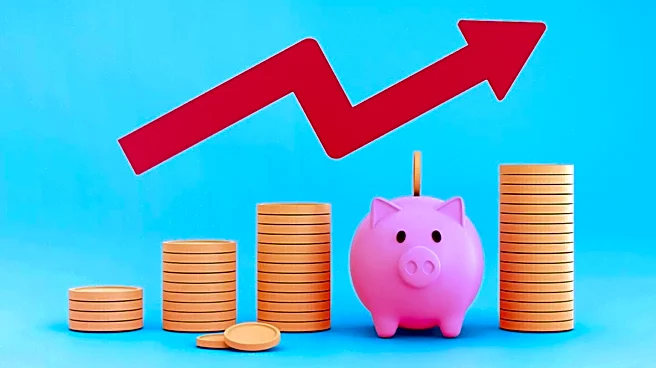
more cost-effective. While maintaining minimum payments on all accounts, any additional funds should be directed towards the debt with the highest interest rate. This method, often referred to as the 'avalanche method,' is highlighted for its potential to save money in the long run, despite potentially slower initial progress on larger debts. Conversely, the 'snowball method,' which focuses on paying off the smallest debts first for psychological wins, may lead to higher overall interest payments. The guidance also emphasizes the importance of consistency in payments and the benefit of automating savings transfers to build a financial cushion.
Why It's Important?
This guidance is crucial for U.S. consumers grappling with various forms of debt, particularly in an economic climate where interest rates can significantly impact financial well-being. High-interest debt can quickly accumulate, trapping individuals in a cycle of payments that primarily cover interest rather than principal. By strategically targeting these debts, consumers can free up more disposable income, improve their credit scores over time, and achieve financial stability faster. The advice also underscores the importance of balancing debt repayment with saving, suggesting that even small, consistent savings can provide a vital emergency fund, reducing reliance on credit for unexpected expenses. This approach can lead to a healthier financial ecosystem for individuals, potentially boosting consumer confidence and spending power in the long term.
What's Next?
Individuals are encouraged to assess their current debt portfolios, identify accounts with the highest interest rates, and adjust their payment strategies accordingly. This involves making at least minimum payments on all debts while allocating extra funds to the prioritized high-interest accounts. Financial institutions and credit counseling services are likely to continue offering tools and advice to help consumers implement these strategies, including debt consolidation options and automated savings plans. The emphasis on consistent, albeit small, steps suggests a shift towards sustainable financial habits rather than quick fixes. Consumers may also explore employer-sponsored retirement plans and health savings accounts as part of a broader financial management strategy.
Beyond the Headlines
The discussion around debt repayment strategies extends beyond mere financial mechanics, touching upon psychological and behavioral aspects of money management. The choice between the 'avalanche' and 'snowball' methods, for instance, highlights the tension between mathematical efficiency and motivational psychology. While the avalanche method is financially superior, the snowball method offers early wins that can keep individuals motivated. This underscores the need for personalized financial planning that considers not only economic realities but also individual temperament and discipline. Furthermore, the advice to balance debt repayment with saving points to a broader cultural shift towards financial resilience, encouraging individuals to build safety nets against unforeseen circumstances, thereby reducing systemic financial vulnerabilities.