





What's Happening?
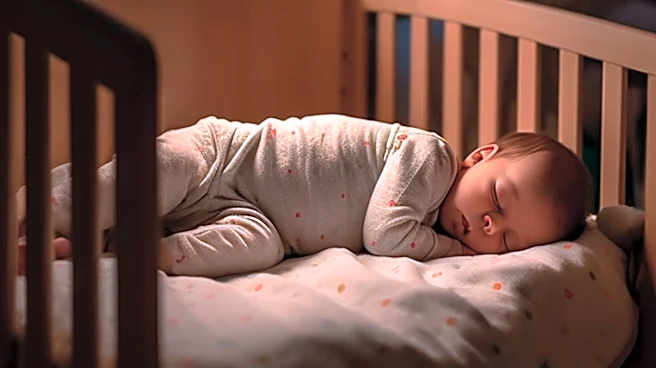
Recent discussions and research reviews address common questions regarding infant sleep training, focusing on its effectiveness, potential harm, and optimal timing. Current evidence, including a large study of over 2,000 babies, suggests that sleep training methods
involving crying do not cause long-term harm, with parents reporting short-term improvements in infant sleep and parental well-being. However, the overall effectiveness is described as modest and short-term, particularly for infants aged 6 to 24 months. It is generally recommended to wait until at least 4 to 6 months of age before starting sleep training, as babies begin producing melatonin and developing more regular sleep-wake cycles around this time. Sleep training before 3 months is considered unlikely to be useful.
Why It's Important?
This information is crucial for U.S. parents and healthcare providers navigating the often-conflicting advice surrounding infant sleep. Clarifying that sleep training, when appropriately applied, does not cause long-term harm can alleviate parental anxiety and empower informed decision-making. Understanding the modest and short-term nature of its effects helps set realistic expectations, preventing frustration if immediate or permanent solutions are not achieved. The guidance on optimal timing (4-6 months) is vital for ensuring interventions are developmentally appropriate, maximizing their potential for success, and avoiding unnecessary stress for both infants and parents. This contributes to better public health outcomes by promoting healthier sleep patterns and reducing parental stress.
What's Next?
Future research will likely continue to explore the nuances of infant sleep, including the long-term impacts of various sleep training methods and the individual differences in infant development that affect responsiveness to interventions. Healthcare professionals may integrate these findings into updated guidelines for pediatric care, offering more precise recommendations to parents. There may also be a greater emphasis on establishing good sleep hygiene and bedtime routines from an early age, even before formal sleep training, as these practices are universally beneficial. The ongoing discussion will also likely focus on distinguishing between healthy sleep development and situations where professional intervention might be more beneficial.
Beyond the Headlines
The debate around infant sleep training touches on deeper societal and cultural values concerning parenting, attachment, and child independence. The scientific clarification that certain methods are not harmful challenges long-held beliefs and anxieties, potentially shifting parenting paradigms. It also highlights the ongoing tension between objective scientific evidence and subjective parental experiences, emphasizing the need for compassionate and individualized approaches. Understanding that sleep is both innate and learned, influenced by genetics and environment, underscores the complexity of child development and the importance of flexible, responsive parenting strategies that adapt to each child's unique needs and developmental stage.