





What's Happening?
China's Tianjin Municipality, specifically its Beichen District, has developed 60 smart factories across various sectors, including light manufacturing, new materials, and high-end equipment. This initiative is driven by leveraging technological innovation
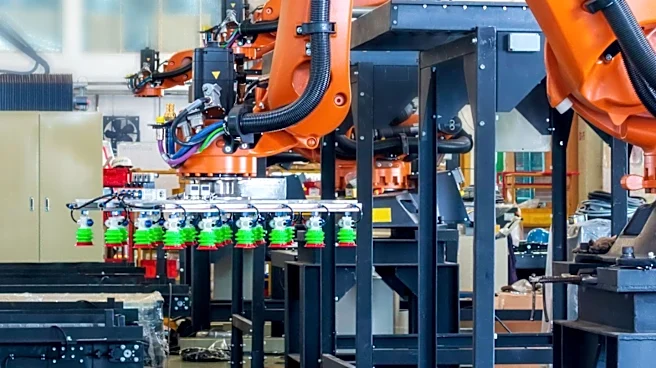
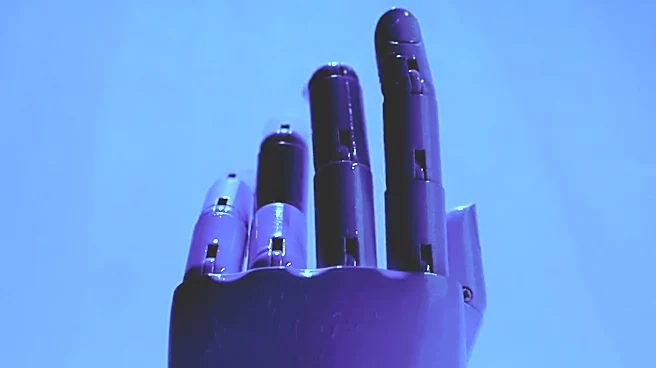
to upgrade local industries. These smart factories integrate advanced technologies such as robotics, artificial intelligence (AI), and the Internet of Things (IoT) into their production processes. The implementation of these technologies aims to automate tasks traditionally performed manually, such as cutting, welding, and finishing, leading to increased production capacity and reduced errors. Automated guided vehicles and robotic arms are operational in workshops, signifying a shift towards intelligent manufacturing. This development is part of a broader trend where smart manufacturing enhances efficiency, customization capabilities, and quality control through automated inspection systems that monitor production in real-time.
Why It's Important?
The development of smart factories in Tianjin highlights a global trend towards industrial automation and the integration of advanced technologies in manufacturing. While this specific initiative is in China, the principles and technologies employed have significant implications for U.S. industries. U.S. manufacturers face similar pressures to improve productivity, reduce operational costs, address labor shortages, and enhance supply chain resilience. The adoption of smart manufacturing, including AI and IoT, can lead to more reliable and durable products, crucial for various applications. The ability to produce highly customized products at scale, without incurring higher costs or longer lead times, offers a competitive advantage. For the U.S., understanding and potentially adopting similar strategies in smart factory development could be vital for maintaining competitiveness in the global manufacturing landscape, fostering innovation, and developing next-generation products with improved functionality and environmental performance.
What's Next?
Looking ahead, industry experts anticipate a continued growth in the role of smart manufacturing, with further integration of advanced technologies. For instance, the use of AI and machine learning could enable predictive maintenance, allowing machines to anticipate and prevent potential issues, thereby improving production efficiency and reducing downtime. The integration of IoT devices is expected to provide real-time data on product performance in the field, offering valuable insights for future product designs. This ongoing evolution suggests that manufacturers, both in China and globally, will continue to invest in new equipment and processes to discover novel ways to improve product design, material usage, and production techniques. The focus will likely remain on enhancing operational efficiency, product quality, and gaining a competitive edge in a market that increasingly demands high levels of customization and reliability.
Beyond the Headlines
The proliferation of smart factories, as seen in Tianjin, signifies a deeper shift in the nature of industrial production, moving beyond mere automation to intelligent, interconnected systems. This transformation raises ethical considerations regarding the future of labor, as increased automation may impact employment in traditional manufacturing roles, necessitating workforce retraining and adaptation. Legally, the integration of AI and IoT in production processes could introduce new challenges related to data privacy, cybersecurity, and intellectual property, especially as factories become more interconnected and data-driven. Culturally, the embrace of smart manufacturing reflects a broader societal move towards technological reliance and efficiency, potentially reshaping consumer expectations for product customization and delivery speed. The long-term shift could see manufacturing becoming more resilient, adaptable, and environmentally sustainable, but also more complex in its technological and regulatory demands.