




What's Happening?
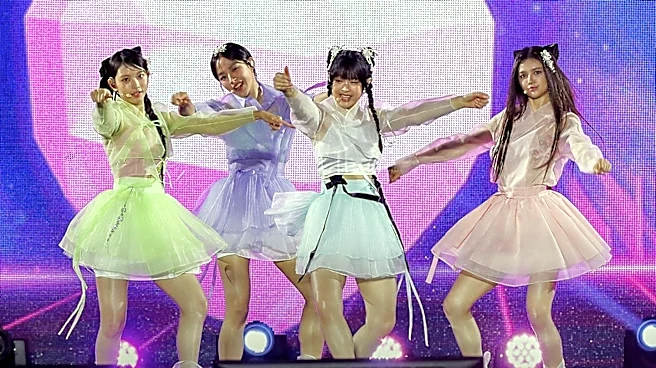
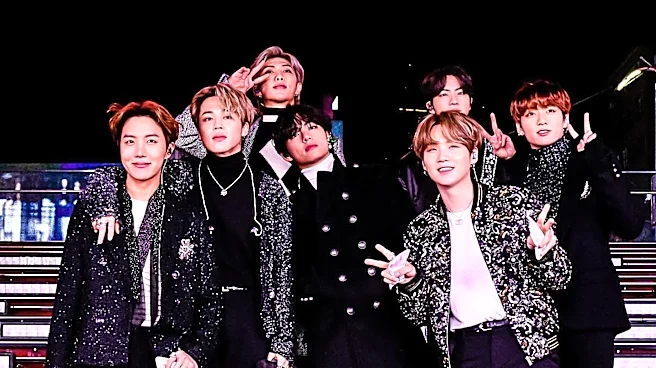
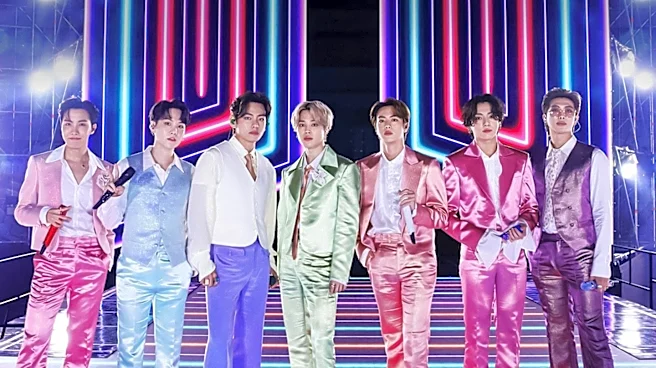
BTS member Jimin has drawn varied responses from fans following his reaction during a live broadcast where his bandmates discussed fellow HYBE group LE SSERAFIM. The discussion arose after LE SSERAFIM won 'best collaboration' for their song 'Spaghetti'
with J-Hope. During the live stream, some netizens interpreted Jimin's behavior as an attempt to downplay LE SSERAFIM's achievement or to 'call out' J-Hope for congratulating the group. This led to accusations that Jimin was unsupportive of other female artists' success. Conversely, many fans defended Jimin, asserting that he did congratulate LE SSERAFIM and has consistently shown support for the group. They pointed to instances where he has acknowledged and celebrated their achievements, suggesting that the negative interpretations were mischaracterizations of his actions. The incident has created a noticeable split in fan opinion regarding Jimin's intentions and overall demeanor.
Why It's Important?
This incident highlights the intense scrutiny and passionate engagement within K-pop fandoms, particularly concerning interactions between popular groups and their members. The divided reactions demonstrate how quickly fan perceptions can shift and how interpretations of subtle gestures or comments can lead to significant online debate. For HYBE, the parent company of both BTS and LE SSERAFIM, such internal group dynamics, even if perceived, can influence public relations and fan loyalty. The controversy also underscores the broader issue of how male and female artists in the K-pop industry are perceived and judged, with accusations of sexism often surfacing in fan discussions. The incident reflects the high expectations placed on idols to maintain a certain public image and the challenges they face in navigating inter-group relationships under constant public observation.
What's Next?
The immediate aftermath of such fan controversies typically involves continued online discussion and debate across social media platforms and fan forums. While official statements from Jimin or HYBE are unlikely for such an incident, the fan base will likely continue to dissect past and future interactions between BTS and LE SSERAFIM. This event may lead to increased scrutiny of how BTS members interact with other HYBE artists, particularly female groups, in future public appearances or broadcasts. For Jimin, this could mean a heightened awareness of how his expressions and comments are perceived by a global audience. The long-term impact is likely minimal on the careers of the artists involved, but it serves as a reminder of the volatile nature of fan sentiment in the K-pop industry.
Beyond the Headlines
Beyond the immediate fan reactions, this event touches upon the broader cultural dynamics within the K-pop industry, where inter-group relationships and perceived rivalries are often amplified by fan communities. It also reflects the pressure on idols to maintain a harmonious public image, especially when associated with the same entertainment agency. The debate over Jimin's reaction can be seen as a microcosm of larger discussions about gender dynamics and support for female artists within the entertainment world. The incident also highlights the power of social media in shaping narratives and influencing public opinion, where short clips and out-of-context moments can quickly escalate into widespread controversies, regardless of the artists' true intentions. This constant digital surveillance creates a challenging environment for public figures to express themselves authentically.