





What's Happening?
Japanese gardens across the United States are experiencing a surge in popularity, drawing increased tourist attention. These gardens, many of which have historical roots dating back to the Meiji era (1868-1912) and America's history of Japanese immigration,
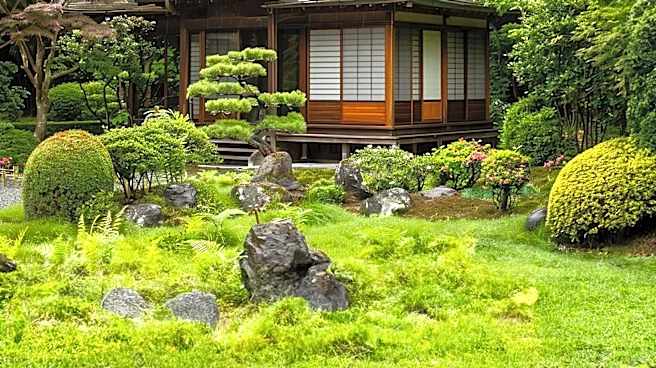
offer a blend of traditional Japanese aesthetics and American landscapes. Examples include the Japanese Tea Garden in San Francisco, established for the 1894 California Mid-Winter International Exposition, and The Huntington Japanese Garden in San Marino, California, which features an 18th-century Japanese manor. Shofuso, a Japanese house built in 1953, was shipped to the U.S. and is now a prominent attraction in Philadelphia's Fairmount Park. These sites are characterized by elements such as meticulously pruned pine trees, raked stone gardens, carp-filled ponds, and traditional Japanese architecture, often designed by renowned Japanese garden architects. The growing interest is partly attributed to the rising popularity of Japanese culture, including matcha and the tea ceremony.
Why It's Important?
The increasing popularity of Japanese gardens in the U.S. signifies a broader cultural exchange and appreciation for Japanese art and philosophy within American society. These gardens serve as significant cultural landmarks, preserving and showcasing traditional Japanese design principles and spiritual iconography. Their appeal to tourists boosts local economies in cities like San Francisco, San Marino, and Philadelphia, contributing to the tourism sector. Furthermore, these gardens offer serene and contemplative spaces, providing a counterpoint to fast-paced modern life and promoting well-being through their aesthetic and philosophical underpinnings. The integration of these gardens into American public spaces highlights a successful cross-cultural dialogue, enriching the national landscape with diverse artistic expressions and historical narratives.
What's Next?
Given the growing interest, it is anticipated that these Japanese gardens will continue to attract a diverse range of visitors, including those interested in horticulture, cultural studies, and tranquil retreats. There may be increased investment in the preservation and expansion of existing gardens, as well as the potential for new Japanese-inspired landscape projects across the country. Educational programs and cultural events, such as tea ceremonies and traditional Japanese arts workshops, could see a rise in demand, further enhancing the visitor experience and deepening public understanding of Japanese culture. Local tourism boards and cultural organizations are likely to leverage this trend to promote these sites as key attractions, potentially leading to increased funding for maintenance and accessibility improvements.
Beyond the Headlines
Beyond their immediate appeal as tourist destinations, these Japanese gardens embody a deeper philosophical and artistic tradition. They are not merely decorative spaces but are designed to convey profound impressions, acting as both a picture and a poem, as noted by Japanologist Lafcadio Hearn. The gardens often employ principles like 'hide and reveal' in strolling gardens or the virtues of restraint in 'karesansui' (dry landscape gardens), offering lessons in mindfulness and aesthetic appreciation. Their presence in the U.S. reflects a long-standing Western fascination with Japanese design and a desire to integrate these contemplative spaces into American urban and natural environments, fostering a unique blend of cultural heritage and contemporary lifestyle.