




What's Happening?
Nevada is highlighted as a prime destination for diverse road trip experiences, showcasing its unique basin-and-range terrain. Among the notable routes is the Pyramid Lake Scenic Byway, which begins in Sparks and ascends through the Virginia Mountains
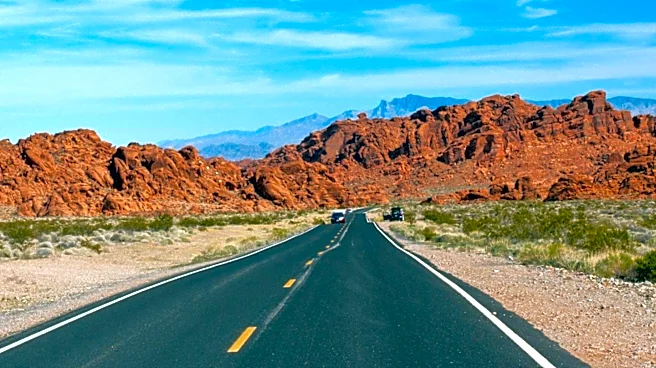
to Mullen Pass, revealing the striking turquoise waters of Pyramid Lake set against volcanic hills. Another prominent route is US-50, famously dubbed 'The Loneliest Road in America' by Life Magazine in 1986, which traverses a dozen mountain ranges and wide desert basins between Ely and Carson City. The Extraterrestrial Highway (SR-375) offers a straight, 98-mile journey through the Great Basin, passing near Area 51 and the alien-themed Little A'Le'Inn in Rachel. Additionally, the Mount Rose Highway (SR-431) provides a high-altitude drive through the Sierra Nevada, offering views of Lake Tahoe and access to the Tahoe Rim Trail. Other scenic drives include the Lamoille Canyon Scenic Byway, Angel Lake Scenic Byway, Wheeler Peak Scenic Drive, and the Valley of Fire Scenic Byway, each presenting distinct geological features and natural beauty.
Why It's Important?
These diverse road trip offerings are important for Nevada's tourism industry, attracting visitors seeking unique outdoor and scenic experiences. The promotion of routes like 'The Loneliest Road' demonstrates how perceived challenges can be transformed into tourist attractions, contributing to local economies in remote areas through gas stations, motels, and restaurants. The emphasis on natural beauty, from volcanic landscapes and desert basins to alpine lakes and red sandstone formations, positions Nevada as a significant destination for nature tourism. This focus on scenic drives also highlights the state's commitment to preserving and showcasing its natural heritage, potentially encouraging further investment in infrastructure and conservation efforts along these routes. The variety of experiences, from high-altitude mountain passes to desert highways, caters to a broad range of travelers, enhancing Nevada's appeal beyond its well-known urban centers.
What's Next?
The continued promotion and maintenance of these scenic byways will likely remain a focus for Nevada's tourism and transportation departments. Efforts may include updating road conditions, enhancing visitor amenities, and developing interpretive signage to enrich the road trip experience. Given the popularity of such routes, there could be increased marketing campaigns targeting domestic and international tourists interested in outdoor adventure and scenic drives. Local communities along these routes, such as Rachel with its alien-themed attractions, may see continued economic benefits and potentially further development of unique roadside businesses. Conservation efforts for areas like the Anaho Island Wildlife Refuge and the BLM's Basin and Range National Monument will also be crucial to preserve the natural integrity that draws visitors to these scenic drives.
Beyond the Headlines
Beyond their immediate tourism appeal, these road trips offer a deeper connection to the American West's vast and often stark landscapes. They provide opportunities for travelers to engage with the region's geological history, from ancient volcanic activity to glacier-carved valleys. The 'Loneliest Road' narrative, in particular, taps into a cultural fascination with solitude and self-reliance, reflecting a romanticized view of the open road. The proximity of the Extraterrestrial Highway to Area 51 also plays into popular culture and conspiracy theories, adding an element of mystery and intrigue to the travel experience. These routes collectively contribute to a broader understanding of Nevada's environmental diversity and its role in shaping the identity of the American West, encouraging a slower, more contemplative form of travel that contrasts with faster, more urban-centric tourism.