







What's Happening?
While thrifting is widely seen as a sustainable choice that extends the lifecycle of clothing, its growing popularity is prompting questions about its true environmental impact and potential for overconsumption. Henry Navarro Delgado, a professor with
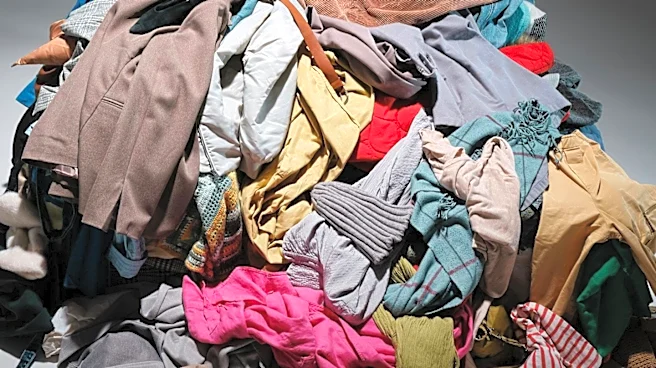
the School of Fashion, suggests that the 'friction' of thrifting—the patience required to sort through diverse items—encourages intentional purchases over impulse buys, thereby extending clothing lifecycles. However, Isla Cowan, a master of fashion program graduate, argues that thrifting's relationship with sustainability is more complex, especially as stores like Value Village face criticism for price markups, potentially pushing out those who rely on secondhand stores for affordable clothing. The concern is that even secondhand shopping, if not approached mindfully, can contribute to textile waste if consumers accumulate piles of unwanted items that are eventually re-donated or discarded.
Why It's Important?
This discussion is crucial for U.S. consumers and the fashion industry as it challenges the simplistic view of thrifting as an inherently sustainable solution. With textile waste projected to reach 134 million tons globally by 2030, understanding the nuances of secondhand consumption is vital. If thrifting merely shifts the problem of overconsumption rather than solving it, the environmental benefits are diminished. The rising prices in some thrift stores also raise social equity concerns, potentially making affordable clothing less accessible to low-income individuals. For businesses, this highlights the need for genuine circular economy models that prioritize reducing overall production and waste, rather than just facilitating the resale of existing items without addressing the root causes of overconsumption.
What's Next?
The conversation around thrifting's sustainability will likely evolve, with a greater emphasis on conscious consumption habits even within the secondhand market. Consumers may be encouraged to be more discerning about their purchases, focusing on quality and longevity rather than simply acquiring more items. Educational efforts could highlight the importance of repairing and caring for clothes, regardless of whether they are new or secondhand. The fashion industry might face increased pressure to develop more transparent and truly sustainable practices, moving beyond 'greenwashing' tactics. Additionally, there could be a push for policies that address textile waste at a systemic level, rather than solely relying on individual consumer choices.
Beyond the Headlines
The debate over thrifting's sustainability touches upon broader societal issues, including the pervasive influence of fast fashion and the culture of disposability. The ease and constant encouragement of new trends through social media contribute to a cycle where clothes are often worn only a few times before being discarded. This rapid turnover not only generates massive waste but also consumes vast resources, including water and energy, and releases harmful chemicals. The idea of 'sufficiency'—consuming only what is truly needed—emerges as a critical concept, challenging the ingrained societal drive for continuous growth and consumption. Ultimately, a truly sustainable approach requires a fundamental shift in both consumer mindset and industry practices, moving towards a model where durability, repair, and minimal consumption are prioritized.