


What's Happening?
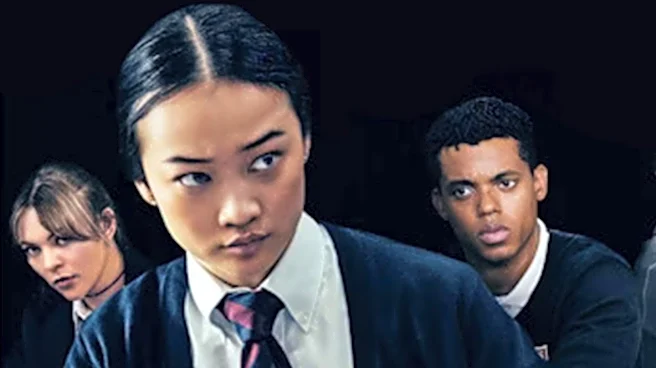
The cast of 'Yellowjackets' has offered insights into the upcoming fourth season, which premieres on November 20 on Paramount+. The new season will explore the characters' return from the Canadian wilderness after their plane crash and their struggles
to reintegrate into society. Jasmin Savoy-Brown, who plays teen Taissa, noted that 'The woods are within us,' indicating the lasting psychological impact of their ordeal. Liv Hewson, who portrays teen Van, discussed her character's visible scars as a metaphor for her queerness and inability to hide her experiences. Samantha Hanratty, playing teen Misty Quigley, highlighted how the return home reveals more about Misty's past and why she behaved the way she did in the wilderness. Hanratty emphasized that high school proves to be 'even more cruel than the wilderness' for the characters. Jenna Burgess, who plays teen Melissa, described her character as more reserved and grounded post-wilderness, making less rash decisions. Nia Sondaya (Akilah) and Sophie Thatcher (Natalie) also shared their characters' evolving experiences, with Thatcher noting Natalie's pre-wilderness hardships prepared her to 'thrive' in the wild. Kevin Alves, as Travis, will explore his character's profound loneliness and grief after losing his father and brother.
Why It's Important?
The discussion from the 'Yellowjackets' cast is important as it sets expectations for the thematic depth of Season 4, particularly its exploration of trauma, identity, and societal reintegration. The cast's insights suggest the season will delve into the psychological complexities of survival and the challenges of returning to a 'normal' life after extreme experiences. The theme of high school being 'more cruel than the wilderness' highlights the social and emotional difficulties the characters face, suggesting a critique of societal pressures and judgment. This narrative approach can resonate with audiences interested in the long-term effects of trauma and the struggle for acceptance. The exploration of Van's visible scars as a metaphor for her queerness also adds a layer of social commentary on visibility and identity, particularly for LGBTQ+ individuals. The series continues to examine how past experiences shape adult lives, offering a nuanced look at human resilience and vulnerability. For fans, these details provide crucial context for understanding character motivations and the overarching narrative arc.
What's Next?
The fourth season of 'Yellowjackets' is set to premiere on November 20 on Paramount+, where viewers will witness the characters' challenging reentry into society. The episodes will further explore the dual timelines, revealing how the wilderness trauma continues to influence the adult counterparts of the survivors. Audiences can anticipate deeper dives into the characters' individual struggles, such as Misty's home life and its impact on her personality, Van's navigation of her identity post-wilderness, and Travis's profound grief. The series is expected to continue its exploration of themes like survival, identity, and the psychological aftermath of extreme events. Viewers will likely see the consequences of the secrets the girls kept from their time in the woods, including murder and cannibalism, as they attempt to adapt to a world that may not understand or accept their experiences. The cast's comments suggest a focus on the social dynamics and judgments faced by the characters upon their return, promising a compelling narrative about the enduring impact of their ordeal.
Beyond the Headlines
Beyond the immediate plot developments, 'Yellowjackets' Season 4 appears poised to delve into profound psychological and sociological implications. The cast's emphasis on high school being 'more cruel than the wilderness' suggests a deeper critique of societal structures and the pressures of conformity. This narrative choice highlights how social judgment and the struggle for acceptance can be as damaging, if not more so, than physical survival challenges. The metaphor of Van's physical scars representing her queerness and inability to hide her true self speaks to broader themes of visibility, authenticity, and the societal challenges faced by marginalized communities. The series could explore the ethical dimensions of survival, particularly how extreme circumstances force individuals to commit acts they might otherwise deem unthinkable, and the subsequent moral reckoning. The long-term psychological impact of trauma, as depicted in the show, offers a commentary on mental health and the often-invisible scars that survivors carry. This season may further explore how individuals reconcile their past actions with their present identities, and the societal mechanisms that either support or hinder their healing and reintegration.