





What's Happening?
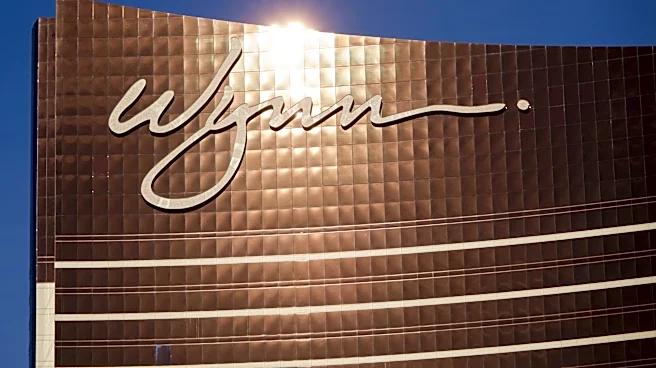
Wynn Resorts, a luxury-oriented casino and resort operator, recently reported an 8% year-over-year decline in revenue. This downturn is attributed to an uneven recovery in Macau and contracting property margins in both Macau and Las Vegas. The company's
stock has been trading below its 52-week high, reflecting investor concerns regarding its balance sheet and development pipeline. Wynn Resorts operates a portfolio that includes Wynn Macau, Encore at Wynn Macau, Wynn Las Vegas, Encore Las Vegas, and Encore Boston Harbor. Despite the current financial headwinds, Wynn Resorts is pursuing significant strategic expansions, including the construction of Wynn Al Marjan Island, an integrated resort in the UAE slated to open in 2027, and a 432-suite tower addition at its Palace resort in Macau. These projects are viewed as long-term growth opportunities, though they involve substantial capital expenditure and execution risks.
Why It's Important?
The performance of Wynn Resorts is a key indicator for the luxury segment of the U.S. gaming and hospitality industry, particularly given its operations in Las Vegas and Boston. The revenue decline highlights the ongoing sensitivity of high-end VIP demand, which has been the weakest segment in the current market. This situation impacts not only Wynn Resorts but also other luxury-focused operators who rely on premium clientele. The company's strategic push into new geographies, such as the UAE, signifies a broader industry trend of seeking diversification and new revenue streams beyond traditional markets like Macau and Las Vegas. The success or challenges of these large-scale international projects will influence future investment decisions and market positioning for other U.S.-based gaming companies looking to expand their global footprint. Furthermore, the heavier debt load carried by Wynn Resorts, compared to competitors, could affect its financial flexibility and ability to weather prolonged market softness.
What's Next?
Wynn Resorts' immediate future will likely involve navigating the uneven recovery of the Macau market and managing the significant capital expenditures associated with its new projects. The opening of Wynn Al Marjan Island in the UAE by 2027 and the completion of the new tower at its Macau Palace resort are critical milestones that will determine the company's long-term growth trajectory. Investors will closely monitor the progress and financial performance of these developments, as they represent the company's primary bets for future revenue generation. The company's ability to attract and retain high-end VIP customers in its existing luxury properties will also be crucial. Any shifts in global travel patterns, economic conditions, or regulatory environments in its operating regions could further influence its performance and strategic decisions.
Beyond the Headlines
The challenges faced by Wynn Resorts underscore a broader shift in the global luxury gaming market. The softening of premium demand, particularly in Macau, suggests a potential re-evaluation of the VIP segment's reliability as a primary revenue driver. This could lead to a strategic pivot across the industry towards more diversified offerings, including mass-market appeal and non-gaming amenities, to mitigate risks associated with high-roller volatility. The company's expansion into the UAE also highlights the increasing competition for integrated resort development in emerging markets, where operators seek first-mover advantages. This trend raises questions about the sustainability of growth in traditional gaming hubs and the ethical and cultural considerations of expanding luxury entertainment into new regions with different regulatory and social landscapes. The long-term success of these ventures will depend not only on financial performance but also on effective navigation of complex international business environments.