





What's Happening?
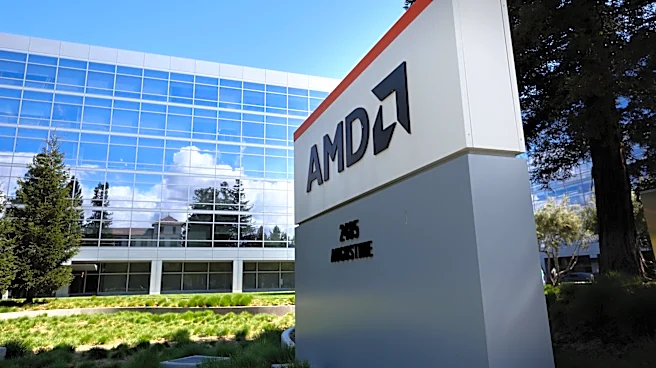
Shares of Advanced Micro Devices (AMD) experienced a significant drop, falling 8% on November 19 and an additional 13% on November 20, following a report from short seller Hunterbrook Capital. The report, titled "AMD Has Its Own China Problem," alleges
that AMD maintains business relationships with Chinese companies that are on the U.S. Commerce Department's Entity List, a blacklist for entities deemed a risk to U.S. national security or foreign policy interests. Hunterbrook Capital claims that a Chinese server maker, IEIT Systems, continued to incorporate updated AMD firmware into its servers after being blacklisted. The report does not specify how IEIT Systems obtained the firmware or if AMD was directly involved. Additionally, Hunterbrook alleges that AMD reported licensing income from two other blacklisted Chinese chip ventures from 2019. These allegations have prompted investor concern regarding AMD's exposure to China, which reportedly accounts for over 20% of its revenue from customers in China and Hong Kong.
Why It's Important?
The allegations against AMD highlight the increasing scrutiny U.S. technology companies face regarding their operations and partnerships in China, particularly concerning entities on the U.S. Commerce Department's Entity List. This situation underscores the geopolitical tensions impacting global supply chains and technology development. For AMD, a significant portion of its revenue and manufacturing processes are tied to China; over 20% of its revenue comes from customers in China and Hong Kong, and a majority of its chip assembly, testing, and packaging are conducted by ventures 85% owned by Tongfu Microelectronics, a Chinese company. Should U.S. regulators investigate these claims further or tighten existing rules, a substantial part of AMD's sales and production capabilities could be at risk. This development also reflects a broader trend where U.S. companies, initially benefiting from competitors' issues with China, are subsequently facing similar challenges, as seen with Nvidia's prior 'China scandal.'
What's Next?
The immediate future for AMD will likely involve addressing the allegations made by Hunterbrook Capital and potentially facing increased scrutiny from U.S. regulators. Investors will be closely watching for any official responses from AMD regarding its alleged ties to blacklisted Chinese companies and its overall China exposure. The U.S. government's recent actions, such as making it harder to ship artificial intelligence (AI) chips to several countries due to concerns about their ultimate destination in China, suggest a continued tightening of export controls. This regulatory environment could lead to further restrictions on technology companies operating with Chinese partners. The unproven nature of Hunterbrook's allegations means that AMD will need to provide clarity to reassure investors and potentially mitigate further stock depreciation. The outcome of any potential regulatory review or AMD's response could set precedents for other U.S. semiconductor companies with significant operations in China.
Beyond the Headlines
The situation with AMD extends beyond immediate stock fluctuations, touching upon critical issues of national security, technological sovereignty, and the complexities of globalized supply chains. The U.S. government's efforts to prevent advanced technology from reaching certain Chinese entities reflect a strategic imperative to maintain a technological edge and address national security concerns. This incident could prompt a re-evaluation of risk management strategies for U.S. tech companies, encouraging them to diversify their supply chains and customer bases away from regions subject to geopolitical tensions. Furthermore, it highlights the power of short sellers in influencing market perceptions and forcing companies to address controversial aspects of their business. The ethical implications of doing business with blacklisted entities, even indirectly, will likely become a more prominent consideration for corporate governance and investor relations in the technology sector.