


What's Happening?
Fashion week coverage plays a crucial role in determining which runway trends ultimately reach retail stores and influence consumer demand. The process involves editors and critics filing reviews, buyers placing orders for future seasons, and stylists
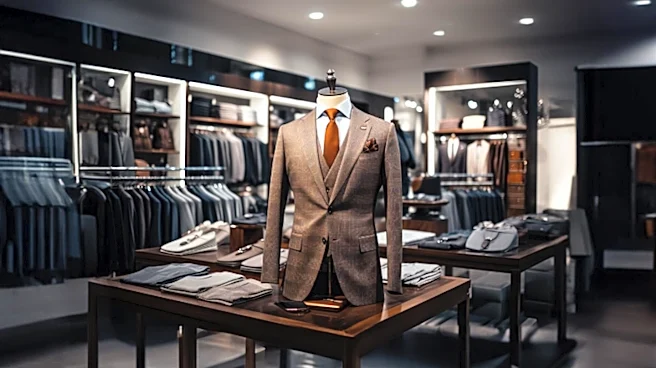
selecting looks for various media appearances. This feedback loop, where media attention influences commercial decisions, is a significant factor in how a collection's proposals transform into widely adopted trends. A collection is initially a proposal, and media coverage acts as the mechanism that converts this proposal into a trend. Editors' arguments about a collection's meaning and its place in the season's conversation can reframe a show. Buyers, working months in advance, order pieces for physical racks, and their choices, rather than the runway order, dictate what shoppers will find in stores. Stylists and image-makers further amplify certain looks through red carpet moments and campaigns, giving them a second life beyond the initial show. This interconnected system ensures that a lauded review can make a buyer's order more defensible, and a buyer's order increases the likelihood of a piece appearing in stores, subsequently leading to more media coverage and street style visibility.
Why It's Important?
The influence of fashion week coverage on retail trends has significant implications for the U.S. fashion industry and consumers. It dictates which styles and designs will be commercially available, impacting manufacturing, marketing, and sales strategies for brands and retailers. When reviewers converge on a particular theme, such as a shift towards vibrant colors, this consensus becomes a commercial signal that retailers use to plan their inventory, window displays, and marketing campaigns. This can lead to certain trends becoming ubiquitous, while others, despite critical acclaim, may not reach consumers if they lack commercial backing. The power of media to 'kill' a trend early is also notable; if the press collectively deems a look overdone, buyers may reduce their orders, leading to under-merchandising and the trend's premature demise, regardless of potential consumer interest. This dynamic highlights how media acts as a gatekeeper, shaping not only what is considered fashionable but also what is economically viable for the industry. For consumers, this means that their choices are often pre-filtered by this intricate interplay between critical reception and commercial decisions, influencing what they see and can purchase in stores.
What's Next?
The fashion industry is experiencing shifts in how trends are disseminated and adopted, with the line between coverage and the show itself blurring. Houses are increasingly designing moments with the intention of generating viral clips, effectively making some shows media events first and collections second. This means that future fashion presentations may prioritize visual impact and shareability over traditional design elements. Additionally, retail is becoming more integrated with the runway, with launch events, pop-ups, and in-store presentations adopting the language and spectacle of a fashion show. This trend suggests that the traditional fashion week calendar may lose some of its gatekeeping power as stores generate their own coverage and create direct connections with consumers. While critics and buyers will continue to play important roles, the path from runway to rack is becoming less linear. The industry will likely continue to adapt to these changes, with a focus on how to effectively communicate the 'quieter craft' of fashion—such as fabric quality and subtle cuts—through evolving media channels, rather than solely relying on viral moments.
Beyond the Headlines
The evolving relationship between fashion shows, media coverage, and retail highlights deeper implications regarding authenticity, consumer agency, and the future of design. The emphasis on virality and 'clip-worthy' moments in fashion shows raises questions about whether genuine artistic expression is being overshadowed by the need for immediate social media impact. This shift could lead to a homogenization of trends, as designers might prioritize easily digestible and visually striking concepts over nuanced or experimental designs. Furthermore, the increasing influence of media in shaping commercial outcomes could diminish consumer agency, as what is available in stores is heavily curated by a combination of critical opinion and buyer decisions. The challenge for the industry will be to balance the commercial imperatives driven by media coverage with the preservation of creative integrity and diversity in design. The long-term impact could be a redefinition of what constitutes 'fashion' itself, moving from a focus on intrinsic design quality to one heavily influenced by its media representation and commercial viability.