









What's Happening?
Bloom Energy Corp., a US fuel-cell manufacturer, is under scrutiny following a report by Hunterbrook Media, which claims the company remains reliant on Chinese scandium despite assurances to the contrary. Scandium, a rare mineral used to enhance the performance
of Bloom's fuel cells, is critical for the company's operations. The report, which caused Bloom's shares to drop before a partial recovery, alleges reliance on Chinese suppliers based on trade data and other sources. Bloom Energy has refuted these claims, stating that its supply chain is diversified and not dependent on any single country. The company maintains that it has sufficient scandium oxide to meet its current and future demands.
Why It's Important?
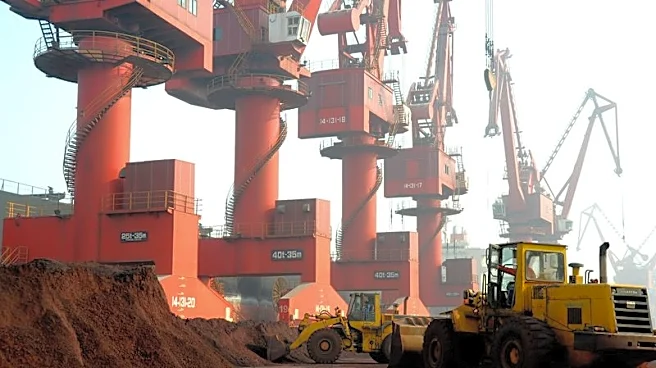
The situation highlights the broader issue of US dependency on foreign sources for critical minerals, particularly from China, which dominates the production and processing of many such materials. This dependency poses a strategic risk, especially amid ongoing US-China trade tensions. The US government, under President Trump's administration, has invested in rebuilding domestic supply chains for critical minerals, but progress has been slow. The reliance on Chinese scandium underscores the challenges faced by US manufacturers in securing stable and independent supply chains for essential materials, impacting industries like aerospace and defense.
What's Next?
Bloom Energy's response to the allegations and its efforts to diversify its supply chain will be closely watched. The company may face pressure to disclose more details about its suppliers to reassure investors. Additionally, the US government may intensify efforts to develop domestic sources of critical minerals, including scandium, to reduce reliance on foreign suppliers. This could involve increased funding for domestic mining projects and partnerships with allied countries to secure alternative sources.
Beyond the Headlines
The controversy over Bloom Energy's scandium supply chain reflects broader geopolitical dynamics, particularly the strategic importance of critical minerals in global trade and national security. As the US seeks to reduce its dependency on China, the development of alternative supply chains could reshape international trade relationships and influence global market dynamics for these minerals. The situation also raises questions about corporate transparency and the challenges companies face in balancing competitive advantage with investor confidence.