





What's Happening?
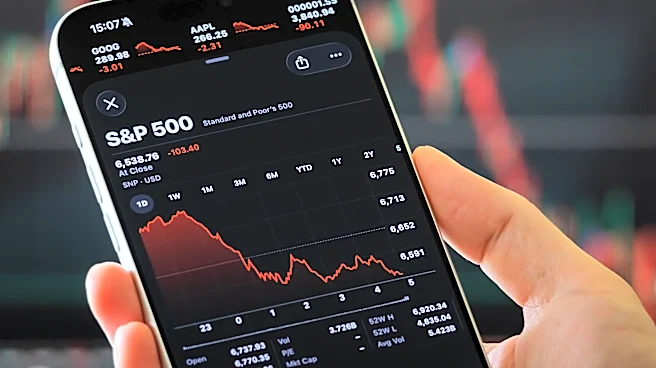
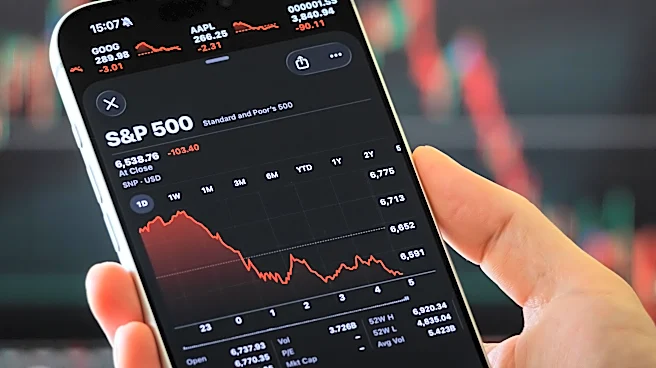
Bank of America has issued a warning regarding the S&P 500, indicating that the index may be entering a corrective phase. According to the bank's technical strategists, the S&P 500 is showing signs of a 'three-wave' correction, which could manifest as a 'sideways-to-lower'
pattern through the third quarter. The strategists, led by Paul Ciana, have identified three key warning signs: diverging momentum, a 'red 13' exhaustion signal, and the index entering the fourth wave of the Elliott Wave Theory. These indicators suggest that the current rally may be losing steam, with the potential for the S&P 500 to drop as low as 6,850, representing a 6% decline from current levels. Despite these concerns, the bank remains optimistic about a market rebound in the fourth quarter.
Why It's Important?
The potential correction in the S&P 500 is significant as it could impact investor confidence and market stability. A correction could lead to increased volatility, affecting both institutional and retail investors. The warning from Bank of America highlights the importance of technical analysis in predicting market trends and the potential risks associated with prolonged rallies. If the correction occurs, it could influence investment strategies and portfolio adjustments, particularly for those heavily invested in tech stocks, which have already seen significant declines. The broader economic implications could include shifts in capital flows and adjustments in monetary policy if market conditions worsen.
What's Next?
If the S&P 500 enters a corrective phase, investors may need to brace for increased market volatility. The potential for a 'Santa rally' in the fourth quarter suggests that there could be opportunities for recovery, but this will depend on various factors, including economic data and corporate earnings. Market participants will likely monitor technical indicators closely to gauge the market's direction. Additionally, any changes in Federal Reserve policy or geopolitical developments could further influence market dynamics. Investors may consider diversifying their portfolios to mitigate risks associated with a potential downturn.