








What's Happening?
Joe Ravitch, co-founder and partner of the Raine Group, a global merchant bank focused on technology, media, and telecommunications, predicts that Skydance's commitment to releasing at least 30 films theatrically per year will necessitate a reliance on international
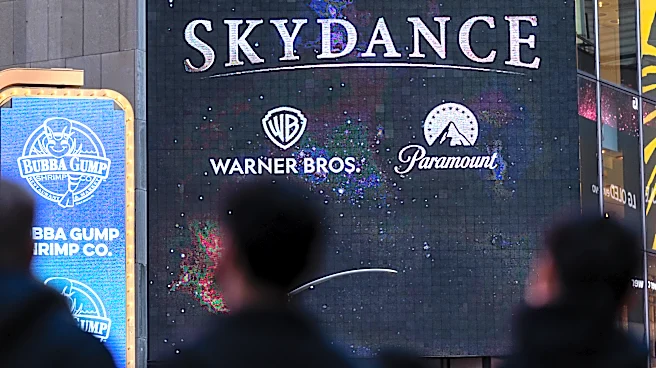
films. This projection follows David Ellison's heavily scrutinized merger of Paramount and Warner Brothers to form Skydance. Ravitch, speaking at the Doha Film Festival's Industry Days, emphasized that the substantial investments required for such a release schedule will compel Skydance to seek international partners and content across multiple genres. He also highlighted a growing interest from streamers in the Global South, as their subscriber bases in Western markets like the U.S. and Western Europe have matured. This shift indicates a move away from a 'Hollywood monoculture' towards a greater demand for local content globally.
Why It's Important?
This prediction has significant implications for the U.S. film industry and its global strategy. A pivot towards international films for theatrical releases by a major U.S. studio like Skydance could diversify the content available to American audiences and foster greater cultural exchange. It also signals a potential shift in investment and production priorities, with more resources flowing into international markets, particularly the Global South. For U.S. economic stakeholders in the entertainment sector, this could mean new opportunities for co-production, distribution, and talent acquisition abroad. Conversely, it might also challenge traditional Hollywood production models, which have historically focused on large-budget, star-driven tentpoles. The emphasis on local creativity over simply attracting Hollywood stars to shoot abroad suggests a more sustainable and culturally authentic approach to international film production, potentially benefiting local economies and creative industries worldwide.
What's Next?
The trend of streamers focusing on the Global South for subscriber growth is expected to continue, driving demand for localized content. This could lead to increased competition among U.S. and international studios to secure compelling international projects and talent. Skydance, under David Ellison, will likely explore strategic partnerships and acquisitions in key international markets to fulfill its theatrical release promise. The industry may also see a re-evaluation of intellectual property rights and revenue-sharing models, particularly as local creators in markets like Brazil and Korea have struggled to retain ownership and upside from globally successful content distributed by major streamers. This ongoing discussion about fair compensation and creative control will be crucial for the future of international film collaborations.
Beyond the Headlines
The shift towards international and local content challenges the long-standing dominance of Hollywood's 'monoculture' and reflects a broader global rebalancing of cultural influence. This development could lead to a richer, more diverse cinematic landscape, offering audiences worldwide a wider array of stories and perspectives. However, it also raises ethical questions about how major U.S. and international platforms engage with local industries, particularly concerning equitable revenue sharing and creative ownership. The example of 'Squid Game,' where Netflix owns the rights despite its Korean origins, highlights a systemic problem where local creators may 'give away the goose that laid the golden egg.' Addressing these issues will be critical for fostering truly collaborative and mutually beneficial international film partnerships, ensuring that the growth of global cinema also empowers local creative economies.