



What's Happening?
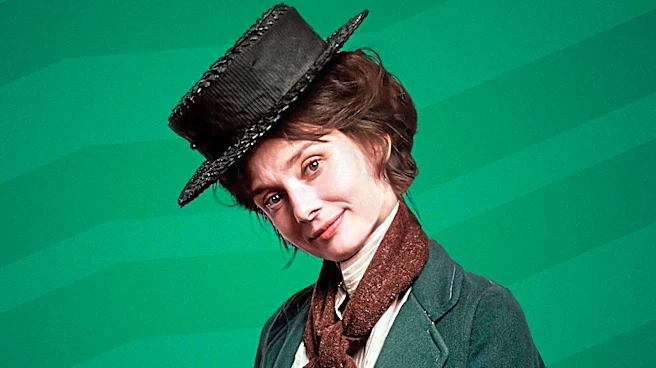
Emily Blunt starred as Mary Poppins in the 2018 film adaptation, a role that presented a more magical and endearing version of the character compared to the original literary creation by P. L. Travers. Travers, born Helen Lyndon Goff, introduced Mary Poppins in 1934,
drawing on her own complex life, mythology, and mysticism. The books, which span eight volumes, depict a considerably darker and more surreal Mary Poppins. A new live-action television series is currently in development, based on elements from Travers' books and optioned from her estate, rather than Disney. This series aims to embrace the original, darker tone and surreal adventures found in the literary works, offering a different interpretation from the well-known film adaptations.
Why It's Important?
This development highlights a significant trend in entertainment where classic literary works are re-examined for adaptations that hew closer to their original source material, often revealing deeper or more complex narratives. For audiences, it offers a fresh perspective on a beloved character, potentially introducing them to the nuances of Travers' original vision, which was less saccharine and more mysterious than the Disney versions. For the entertainment industry, it signifies a strategic move to differentiate new adaptations by tapping into the untapped potential of original texts, especially when previous adaptations have become iconic. This approach can attract new viewers interested in more sophisticated storytelling while also appealing to long-time fans of the books. It also underscores the enduring appeal of the Mary Poppins character and universe, demonstrating its versatility across different media and interpretations.
What's Next?
The new live-action television series, being shepherded by producer Tom Winchester through Pure Fiction Television, is in development. This series will draw from the eight Mary Poppins books, published between 1934 and 1988, with the intent of creating a show that embraces the literary Mary Poppins' vain, stern, and often exasperating personality. The adaptation could utilize various elements from the books, such as the episodic nature of adventures, the expansion of Mary's mythological world, and standalone extraordinary episodes that showcase Travers' blend of whimsical, melancholy, and eerie fantasy. The series may not adapt the stories in publication order, instead weaving adventures from throughout the books into its own chronology, potentially featuring elements like cats on another planet to distinguish itself from previous adaptations.
Beyond the Headlines
The decision to base a new television series on the original, darker Mary Poppins books rather than the more widely known Disney adaptations reflects a broader cultural shift towards appreciating the complexities and original intentions of classic literature. This move could challenge public perception of iconic characters, revealing the depth and sometimes unsettling aspects that were softened for mainstream audiences. Ethically, it raises questions about artistic interpretation and fidelity to source material, especially when a character has been popularized in a different form. Culturally, it could spark renewed interest in Travers' original works, encouraging a deeper engagement with children's literature and its often profound themes. This re-interpretation also speaks to the evolving landscape of storytelling, where creators are increasingly exploring less conventional or more challenging narratives, even for family-friendly properties, to resonate with contemporary audiences seeking richer, more nuanced content.