





What's Happening?
The U.S. Army Corps of Engineers has issued a federal permit for the construction of the Louisiana International Terminal (LIT), a significant development for the Port of New Orleans (Port NOLA). This $1.8-billion greenfield terminal aims to enhance the Lower
Mississippi River gateway's capacity for larger vessels and increased cargo volumes. The project is a collaboration between Port NOLA, Terminal Investment Limited (the terminal-operating arm of Mediterranean Shipping Co.), and Ports America, with the latter two contributing over $800 million. Additionally, the terminal has secured $300 million in federal grants. The LIT is designed as a deepwater container facility with multimodal connections to interstate highways and the nation’s Class I rail network, intending to provide market access across more than 30 states and bolster Louisiana’s position in U.S. import and export supply chains. Plans include two berths capable of accommodating two 16,000-container vessels, featuring a water depth of 55 feet, making it one of the deepest U.S. ports. The terminal is projected to open in 2028 with an initial annual capacity of 180,000-280,000 TEUs, with full build-out expected over a 25-year period to reach 2 million container units.
Why It's Important?
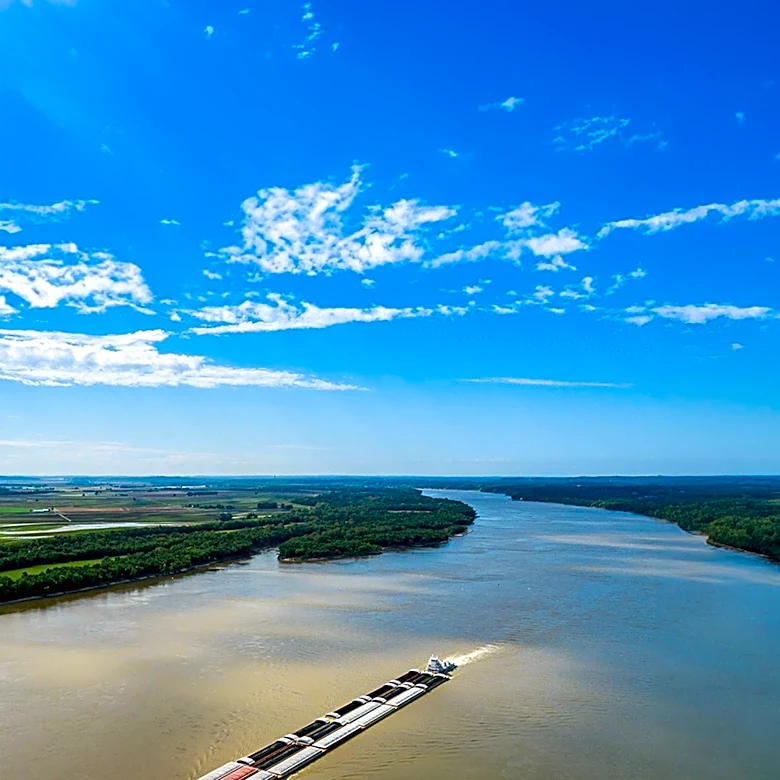
The approval of the Louisiana International Terminal is crucial for addressing long-standing constraints on container operations upriver from the Gulf of Mexico. Currently, ultra-large container vessels exceeding 16,000 twenty-foot equivalent units (TEUs) cannot navigate beneath the Crescent City Connection bridge, limiting their access to existing New Orleans terminals. By locating farther downriver, the LIT will enable direct calls by these larger vessels while maintaining a Mississippi River location close to Gulf shipping lanes. This project is significant as it represents the only new greenfield container port currently under development in the United States. It is expected to support Port NOLA’s strategy to retain and attract cargo that might otherwise be diverted to competing U.S. gateways, thereby expanding the port’s capability to handle containerized imports and exports. The economic impact analysis cited by Port NOLA indicates that its existing cargo activities already contribute over $101 billion in nationwide economic value and support more than 342,000 U.S. jobs, including over 122,000 jobs in Louisiana. The new terminal is poised to further enhance these economic benefits and strengthen the U.S. supply chain.
What's Next?
With the federal permit secured, construction on the Louisiana International Terminal is set to proceed. The port is targeting an opening in 2028, with initial annual capacity expected to be between 180,000 and 280,000 TEUs. The project will then undergo a phased completion over a 25-year period, ultimately reaching a full capacity of 2 million container units. This development will likely lead to increased shipping traffic and economic activity in the Gulf Coast region. Stakeholders, including shipping companies, logistics providers, and businesses across more than 30 states, will be closely watching the progress of the terminal's construction and its operational launch. The project's success could influence future infrastructure investments in other U.S. ports, particularly those seeking to accommodate larger vessels and enhance their competitive position in global trade. The integration with the nation's Class I rail network will also be a key focus, ensuring efficient multimodal transport of goods.
Beyond the Headlines
The development of the Louisiana International Terminal signifies a broader strategic shift in U.S. port infrastructure, emphasizing the need for deeper water access and increased capacity to handle the growing size of container vessels. This project highlights the ongoing competition among U.S. ports to become preferred gateways for international trade, particularly in the context of evolving global supply chains. The investment in a greenfield port, rather than expanding existing facilities, suggests a long-term vision for accommodating future trade demands and technological advancements in shipping. Furthermore, the collaboration between a public port authority (Port NOLA) and private entities (Terminal Investment Limited and Ports America) underscores a growing trend of public-private partnerships in large-scale infrastructure projects. This model allows for shared investment and expertise, potentially accelerating development and mitigating financial risks. The terminal's strategic location on the Mississippi River, with access to all six North American Class I railroads, positions it as a critical hub for inland distribution, potentially reducing transportation costs and improving efficiency for businesses across the central U.S.