
What's Happening?
U.S. business sentiment reached a record low in October, registering 6.02 on Principal's quarterly Financial Well-Being Index, the lowest since April 2025. This represents an 8% decline from July, primarily
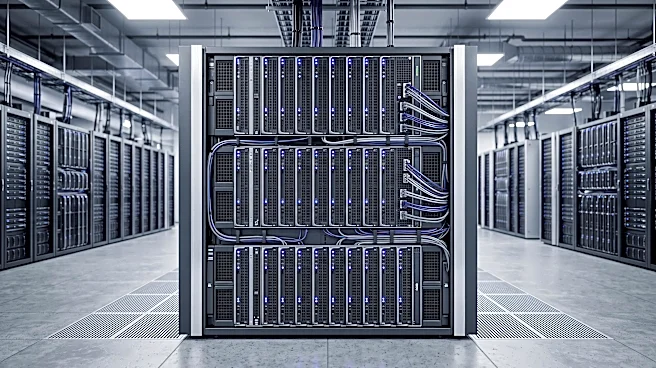
driven by a significant drop in optimism among small and midsize businesses, which fell to 5.28 from 5.97 in October 2025. In contrast, large businesses showed a slight increase in optimism, moving from 7.05 to 7.08. This widening gap in sentiment between different-sized firms is the largest recorded since March 2021. Despite 52% of surveyed companies reporting growth, broader economic anxieties are impacting overall optimism. Only 16% of respondents believe the U.S. economy is currently growing, and optimism for future economic growth has decreased by 10 percentage points since July, now standing at 40%. To address cost pressures, 72% of companies are utilizing flexible or specialized talent, and 58% are implementing AI and automation for various tasks.
Why It's Important?
The decline in U.S. business sentiment, particularly among small and midsize businesses, signals uneven economic pressure across the country. These smaller entities are disproportionately affected by rising costs and economic uncertainty, which could lead to reduced investment, slower job creation, and potential business closures. The adoption of flexible staffing and AI by a majority of companies highlights a strategic shift in how businesses are managing operational costs and efficiency in a challenging economic climate. While flexible staffing can offer agility, it may also indicate a reluctance to commit to permanent hires, potentially impacting long-term employment stability. The increased reliance on AI and automation suggests a move towards technological solutions to maintain competitiveness and productivity, which could reshape the labor market by automating certain tasks and requiring new skill sets from the workforce. This trend could lead to a more efficient, but potentially less labor-intensive, business environment.
What's Next?
As businesses continue to grapple with economic pressures, the trend of adopting flexible staffing and AI is likely to accelerate. This could lead to a more dynamic labor market where specialized skills and adaptability are highly valued. Policy discussions may emerge regarding support for small and midsize businesses to mitigate the uneven economic impact and ensure their resilience. The increased integration of AI into business operations will also necessitate ongoing conversations about workforce training, ethical AI deployment, and the potential for job displacement. Companies will likely continue to explore how AI can optimize various functions, from customer service to data analysis, further embedding these technologies into their core strategies. The disparity in sentiment between large and small businesses may also prompt closer examination of economic indicators and targeted interventions to support the segments most affected by current economic conditions.
Beyond the Headlines
The growing reliance on AI and flexible staffing points to a fundamental transformation in the nature of work and business operations. This shift raises deeper questions about the future of employment, the skills gap, and the potential for increased economic inequality if smaller businesses cannot effectively adopt these technologies. The ethical implications of AI, including data privacy and algorithmic bias, will become increasingly critical as more companies integrate these tools. Furthermore, the divergence in sentiment between large and small businesses could exacerbate existing economic divides, potentially leading to a more consolidated market where larger entities with greater resources for technological adoption thrive, while smaller businesses struggle to keep pace. This trend could also influence consumer behavior, as businesses leverage AI for personalized experiences, raising concerns about data usage and consumer autonomy.