



What's Happening?
Disney and Adobe have entered into a multi-year agreement to co-develop custom generative AI models. This collaboration aims to scale AI tools across Disney's various business segments, including its theme parks, studio operations, and sports media divisions.
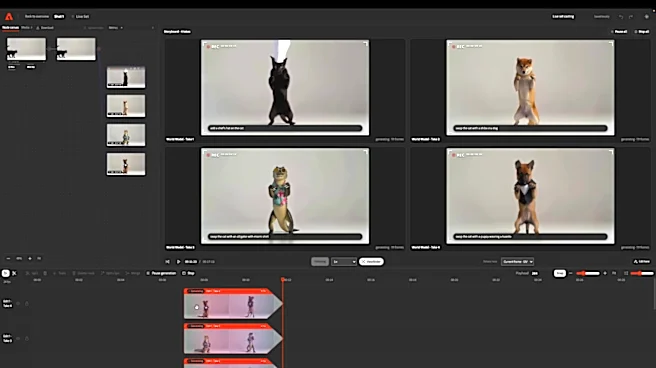
The initial focus will be on accelerating project development timelines within Disney's Experiences division, which encompasses its global theme parks, resorts, and cruise lines, and for concept exploration at StudioLAB, Walt Disney Studios' innovation hub. Adobe's Firefly Foundry will be utilized to build and deploy these custom AI models, which will be trained on Disney's proprietary intellectual properties to generate production-ready outputs. These models will remain private and exclusive to Disney. Walt Disney Imagineering has already implemented custom image generation and sketch-to-image models to transform hand-drawn sketches into fully rendered concept art, significantly compressing creative development timelines from months to hours or days, according to Kyle Laughlin, Senior Vice President of R&D technology and engineering at Disney.
Why It's Important?
This strategic partnership signifies a major step for Disney in leveraging advanced AI to enhance its creative and operational efficiencies across its vast entertainment empire. By developing custom generative AI models trained on its unique intellectual property, Disney aims to streamline content creation, accelerate design processes for theme park attractions, and boost fan engagement for its sports media arm, ESPN. The ability to compress development timelines from months to days could lead to significant cost savings and faster market delivery of new experiences and content. This move also highlights the growing trend of major corporations investing in proprietary AI solutions to maintain competitive advantages and protect their unique brand assets. For Adobe, this collaboration reinforces its position as a leading provider of enterprise-level AI tools, demonstrating the practical application and scalability of its Firefly Foundry platform in the media and entertainment industry. The success of this partnership could set a precedent for how other media giants adopt and integrate AI into their core operations.
What's Next?
The immediate next steps involve the deployment of these custom AI models within Disney's Experiences division and StudioLAB to accelerate creative processes. Adobe will also work with Disney to enhance fan engagement at ESPN and expand access to ESPN's content archive using AI tools. As the partnership progresses, it is expected that these generative AI models will be integrated more broadly across Disney's various segments, potentially impacting animation, film production, and digital content creation. The development of these proprietary AI tools will likely lead to further innovation in how Disney conceptualizes, designs, and delivers entertainment experiences. Other media companies will be closely watching the outcomes of this collaboration, which could spur similar investments in custom AI solutions across the industry. Disney's emphasis on these tools accelerating creative development rather than replacing roles suggests a focus on augmentation, but the long-term impact on creative workflows and staffing will be a key area to monitor.
Beyond the Headlines
Beyond the immediate operational benefits, this collaboration between Disney and Adobe touches upon deeper implications for the future of creativity and intellectual property in the age of AI. By training AI models on Disney's vast library of intellectual property, the company is essentially creating AI systems that can generate new content in the distinctive Disney style, raising questions about the nature of authorship and originality. This proprietary approach to AI development could further solidify Disney's unique brand identity and creative output, potentially creating a new competitive moat. However, it also opens discussions about the ethical use of AI in creative fields, the potential for AI-generated content to dilute artistic integrity, and the evolving legal frameworks surrounding AI-created works. The partnership underscores a broader industry shift where AI is not just a tool for efficiency but a fundamental component of creative production, pushing the boundaries of how stories are told and experiences are crafted in the entertainment landscape.