






What's Happening?
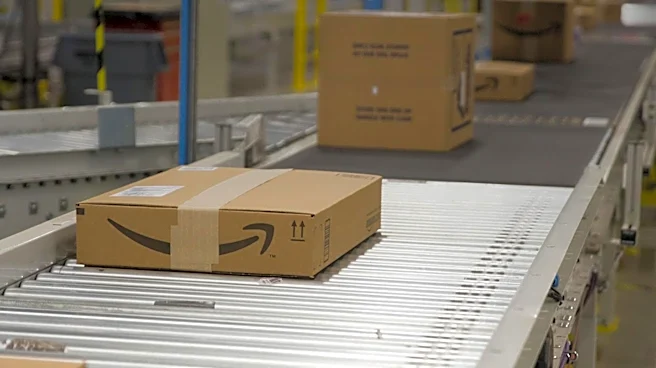
Amazon is strategically shifting towards an in-house delivery model, with internal projections indicating that the company expects to deliver 88.7% of its U.S. packages by itself by 2029. This represents a substantial increase from previous years and
signifies a fundamental change in Amazon's logistics philosophy. The company's internal planning documents suggest that the share of packages delivered by the U.S. Postal Service (USPS) could fall to approximately 8% by 2029, while UPS's share might decrease to around 1.4% in the same timeframe. This move is driven by Amazon's desire for greater control over the customer experience, increased delivery speed, and the ability to leverage delivery data for continuous optimization. Amazon has already invested over $4 billion to expand its rural delivery network, aiming to cover more than 13,000 ZIP codes and add capacity for over one billion additional packages annually. This expansion is viewed not merely as a transportation solution but as a critical component of broader customer coverage.
Why It's Important?
This strategic shift by Amazon has significant implications for the U.S. logistics industry and the broader e-commerce landscape. Traditional parcel carriers like UPS and USPS stand to lose a substantial portion of their Amazon-related volume, potentially forcing them to adapt their business models and focus on other profitable segments, such as healthcare or business-to-business shipments. For Amazon, greater control over its delivery network allows for enhanced customer satisfaction through faster and more reliable deliveries, including same-day and ultra-fast options. The ability to collect and analyze delivery data provides Amazon with a powerful feedback loop, enabling continuous improvement in routing, fulfillment, and overall network efficiency. This vertical integration also allows Amazon to view rural delivery not just as a cost center but as a means to expand customer acquisition and lifetime value, a different calculation than traditional carriers might make. The move underscores a broader trend where large e-commerce companies are increasingly internalizing logistics capabilities to gain a competitive advantage.
What's Next?
As Amazon continues to expand its in-house delivery capabilities, traditional carriers will likely further diversify their services and customer bases to offset the reduced volume from Amazon. The parcel market may become more fragmented, with carriers focusing on specialized segments or premium services. Amazon's internal projections are subject to change, but the direction towards greater self-sufficiency in delivery is clear. The company will likely continue to invest in automation, AI, and advanced supply chain technology to optimize its network. While Amazon aims for increased internal delivery, it is also expected to maintain some partnerships with external carriers, particularly in areas where their infrastructure provides a strategic advantage, indicating a hybrid logistics model for the future. This evolving landscape will necessitate continuous adaptation from all players in the logistics sector, from carriers to 3PLs, who will need to move up the value chain by offering more sophisticated services beyond basic transportation.
Beyond the Headlines
Amazon's aggressive move into self-delivery highlights a deeper philosophical shift in how large companies view their supply chains. The traditional model of outsourcing transportation to focus on core business is being challenged by the desire for end-to-end control, speed, and data leverage. This trend suggests that logistics is no longer merely an operational cost but a strategic asset and a critical component of the customer experience and brand reputation. The ethical and labor implications of this shift are also significant, as seen with initiatives like the Delivery Protection Act in Chicago, which aims to regulate subcontracting practices and protect delivery workers. The increasing reliance on technology, AI, and data in logistics raises questions about job displacement and the evolving skill sets required in the industry. Ultimately, Amazon's strategy underscores that for e-commerce giants, delivery is not just about moving packages; it's about owning the entire customer journey and leveraging every touchpoint for competitive advantage.