








What's Happening?
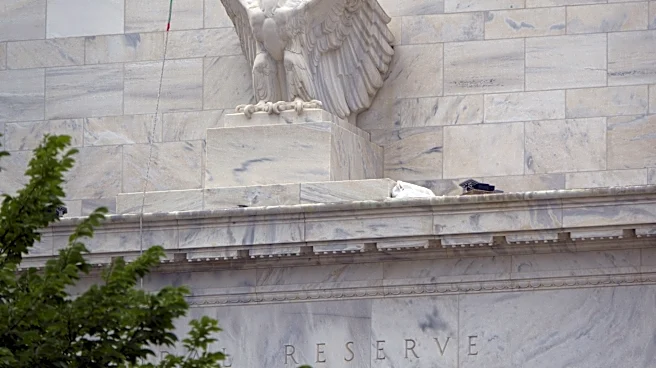
The Federal Reserve has released its annual stress test results, indicating that the largest U.S. banks are capable of withstanding over $708 billion in losses during a severe global recession. This assessment involved 32 banks and was based on a hypothetical
scenario that included a 10% unemployment rate, a 39% drop in commercial real estate prices, and a 30% decline in home prices. Despite these challenging conditions, all banks maintained capital levels above the minimum requirements. The common equity tier 1 capital ratio, a critical measure of financial stability, fell by 1.6 percentage points but remained above the necessary thresholds. The stress test results highlight the banking system's robustness, as stated by Federal Reserve Vice Chair for Supervision Michelle Bowman.
Why It's Important?
The stress test results are significant as they demonstrate the resilience of the U.S. banking system in the face of potential economic downturns. This resilience is crucial for maintaining financial stability and ensuring that banks can continue to lend to households and businesses even during severe economic conditions. The findings also come at a time when the Federal Reserve is considering changes to capital requirements, which could impact how banks prepare for future economic challenges. The ability of banks to absorb substantial losses without breaching capital requirements reassures investors and policymakers about the health of the financial system.
What's Next?
The Federal Reserve has indicated that it will not adjust the stress test buffers until 2027, as it plans to revise the methodology in response to industry feedback. This decision means that the current stress test results will not immediately affect the capital requirements for large banks. However, banks are likely to focus on the upcoming Basel III Endgame proposal, which could lead to changes in capital regulations. Analysts suggest that if the current stress test results had influenced capital requirements, some banks, such as Morgan Stanley and Citigroup, might have faced significant reductions in their capital buffers.