




What's Happening?
European Commission President Ursula von der Leyen has issued a stern warning to China, stating that if negotiations fail to reduce the record trade deficit, the European Union will be compelled to utilize its protective trade instruments. The relationship
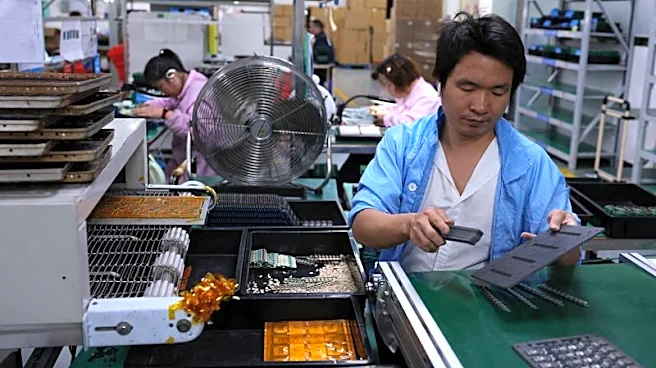
between Brussels and Beijing has been tense since talks began in June. China recently prohibited its companies from participating in EU antitrust investigations, while the EU Commission initiated additional trade defense procedures concerning alleged dumping of Chinese products in the European market. Von der Leyen emphasized that while China is a crucial economic partner, the EU cannot accept persistent imbalances. She noted that all EU member states currently face a trade deficit with China, creating a shared interest in achieving fairer trade conditions. The EU faces a surge in cheap imports from China, which have increased by 45 percent over the past five years, leading to a trade deficit of approximately 1 billion euros per day. The Commission has set an October deadline for reaching an agreement with China to rebalance trade relations.
Why It's Important?
This development is significant for global trade relations and could have ripple effects on the U.S. economy and its trade policies. The EU's stance against China's trade practices, particularly regarding alleged dumping and market access restrictions, mirrors concerns previously raised by the U.S. A more assertive EU in trade disputes with China could lead to a united front among Western economies, potentially increasing pressure on Beijing to adhere to international trade norms. For U.S. businesses, a rebalancing of trade between the EU and China could either open new markets or intensify competition, depending on how China reacts and whether it shifts its trade focus. If the EU implements protective measures, it could disrupt global supply chains and alter the competitive landscape for various industries. The use of the EU's Anti-Coercion Instrument, dubbed a 'trade bazooka,' could set a precedent for how major economic blocs address perceived unfair trade practices, influencing future U.S. trade strategies and negotiations with China.
What's Next?
The immediate next step is the October deadline set by the European Commission for negotiations with China to address the trade deficit. If these talks do not yield a breakthrough, the EU has indicated its readiness to deploy its full range of protective instruments. This could include the Anti-Coercion Instrument, which allows for measures such as restricting access to public tenders or withdrawing intellectual property rights. However, the activation of this instrument requires majority support from EU member states, which is not guaranteed given that many individual countries maintain their own trade relationships with China for market access and investment. China has previously threatened retaliatory measures against planned EU regulations that could limit market access for Chinese companies, suggesting a potential escalation of trade tensions. The outcome of these negotiations and the EU's subsequent actions will significantly shape future EU-China trade relations and could influence global trade dynamics.
Beyond the Headlines
The escalating trade tensions between the EU and China highlight a deeper struggle over economic sovereignty and the future of global trade governance. The EU's pushback against China's trade practices reflects a growing recognition among Western powers that unchecked trade imbalances and unfair competition can undermine domestic industries and economic stability. This situation also brings to the forefront the challenge of balancing economic engagement with strategic competition. While China remains a vital economic partner for the EU, the emphasis on 'de-risking without decoupling' indicates a strategic shift towards greater self-reliance and resilience in critical supply chains. The potential use of the Anti-Coercion Instrument signifies a more robust and unified European approach to economic diplomacy, moving beyond traditional trade defense mechanisms. This could lead to a re-evaluation of international trade rules and a push for greater transparency and fairness in global commerce, impacting how countries like the U.S. navigate their own complex trade relationships.