






What's Happening?
The final reading of the University of Michigan's Consumer Sentiment survey for November showed an improvement, rising to 51.5, which was in line with economists' expectations. This marks an increase from October's final reading of 48. The rise in sentiment
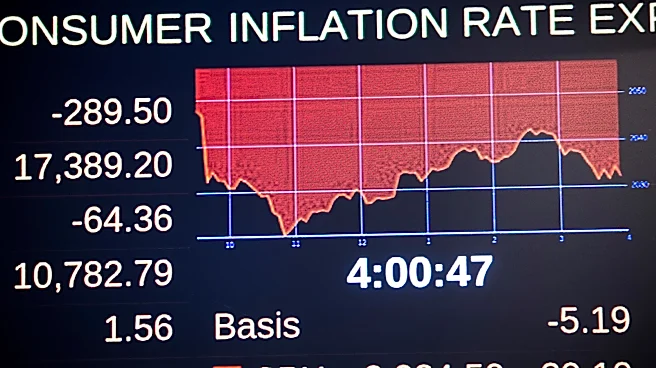
was primarily driven by substantial post-election gains in both short- and long-run expected business conditions, particularly among independent consumers. Current personal finances also improved for low- and middle-wealth consumers, partly due to falling gas prices. However, those with larger stockholdings reported a decline in personal finances, consistent with ongoing agitation in AI-related stock markets. Despite the improved sentiment, spot gold was trading near $3,568.65 per ounce, reflecting a 1.56% loss on the session, as inflation expectations ticked lower but remained above pre-Iran conflict levels.
Why It's Important?
The rise in U.S. consumer sentiment is a positive indicator for the broader economy, suggesting increased consumer confidence in future business conditions and personal finances. This can translate into stronger consumer spending, which is a significant driver of economic growth. However, the continued pressure on gold prices, despite improved sentiment, highlights the dominant influence of other macroeconomic factors, particularly the Federal Reserve's hawkish stance and the strength of the U.S. dollar. The divergence between consumer optimism and gold's performance indicates that investors are prioritizing interest-bearing assets over non-yielding safe havens in the current environment. The decline in inflation expectations, while positive for consumers, further reduces gold's appeal as an inflation hedge, impacting investment decisions across various U.S. financial sectors.
What's Next?
While consumer sentiment shows improvement, the gold market's immediate future remains tied to the Federal Reserve's monetary policy and the U.S. dollar's strength. The softening of inflation expectations could potentially influence the Fed's future decisions, though policymakers have consistently emphasized their commitment to bringing inflation down. Investors will continue to monitor upcoming economic data, including inflation reports and employment figures, for further clues on the Fed's trajectory. The performance of the stock market, particularly the AI-linked sector, will also be a factor, as agitation in these markets can lead to broader financial market volatility. For gold, a sustained recovery would likely require a significant shift in the Federal Reserve's policy outlook or a weakening of the U.S. dollar, neither of which appears imminent.
Beyond the Headlines
The nuanced picture presented by the consumer sentiment report—improved overall sentiment but declining finances for high-wealth individuals due to stock market volatility—reveals underlying economic complexities. It suggests a potential disconnect between the general public's perception of economic health and the experiences of those heavily invested in the stock market. The political dimension, with independents swinging left and Republicans showing less favor for a slowdown in White House policy, indicates how political shifts can influence economic expectations. This interplay of consumer psychology, monetary policy, and political dynamics creates a challenging environment for traditional asset classes like gold, forcing investors to consider a broader range of factors beyond simple inflation hedging. The continued focus on inflation as a primary concern, despite softening expectations, underscores its persistent impact on consumer behavior and economic stability.