






What's Happening?
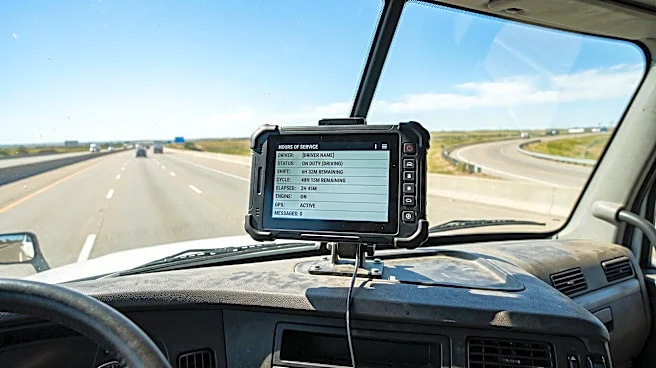
The American Trucking Associations (ATA) has released a new report titled 'The Road to ELD Certification: Recommendations of ATA’s Working Group on ELD Fraud,' outlining six recommendations to strengthen the integrity of electronic logging devices (ELDs)
and combat fraud. These recommendations aim to build upon the Federal Motor Carrier Safety Administration's (FMCSA) existing efforts to address ELD manipulation. Key proposals include implementing automated checks for common fraud indicators in electronic records of duty status, such as out-of-sequence file numbers and impossible distances. The ATA also suggests requiring ELD registering companies to have a verified U.S. footprint to enhance accountability. Furthermore, the report calls for enhancing FMCSA's process for investigating potential fraud by establishing formal procedures for receiving, tracking, and resolving reports, particularly from law enforcement, and providing additional resources for investigations. The ATA's Safety Policy Committee initiated this working group in October 2025 to support stronger measures for ELD integrity, including third-party certification.
Why It's Important?
The integrity of ELDs is crucial for highway safety and fair competition within the U.S. trucking industry. According to a forthcoming report by the Commercial Vehicle Safety Alliance, fleets involved in ELD tampering exhibit a 56% higher crash rate, highlighting the direct link between ELD fraud and increased safety risks. By making fraud harder to commit and easier to detect, the ATA's recommendations aim to protect responsible carriers who adhere to regulations, ensuring a level playing field. Enhanced fraud detection and enforcement mechanisms would also support law enforcement in identifying and penalizing non-compliant operators. The proposed independent certification program and regular reviews of certified devices would create a more robust and adaptable system, safeguarding against evolving methods of circumvention and ensuring sustained compliance. This initiative is vital for maintaining public trust in the trucking industry's commitment to safety and regulatory adherence.
What's Next?
The ATA's recommendations will be presented to the FMCSA and Congress for consideration. The FMCSA is expected to review these proposals as it continues its efforts to strengthen vetting procedures, enhance oversight, and remove noncompliant devices from the market. The report specifically calls on Congress to provide the FMCSA with sufficient staff and financial resources to effectively implement enhanced fraud investigation processes. The establishment of an independent certification program, drawing lessons from Canada's model while adapting to the U.S. regulatory system, would require significant collaboration between government agencies and qualified independent organizations. Regular reviews of certified devices and periodic audits of certification providers would also need to be integrated into future regulatory frameworks to ensure long-term effectiveness and adaptability to technological advancements and new fraud techniques.
Beyond the Headlines
The push for stronger ELD integrity extends beyond immediate safety concerns, touching upon broader issues of technological regulation and enforcement in a rapidly evolving digital landscape. The emphasis on a 'durable, resilient certification system' reflects a recognition that fraud techniques will continue to adapt, necessitating a proactive and flexible regulatory approach. The call for a verified U.S. footprint for ELD providers highlights concerns about accountability and jurisdiction in an increasingly globalized market for technology solutions. This initiative could set a precedent for how other industries regulate technology-dependent compliance, particularly where public safety is a primary concern. The balance between regulatory oversight and fostering innovation in ELD technology will be a continuous challenge, requiring ongoing dialogue and collaboration among industry stakeholders, technology providers, and government bodies to ensure both effectiveness and practicality.