
What's Happening?
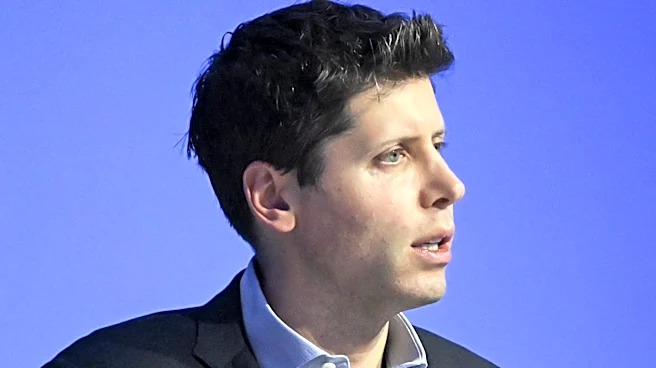
OpenAI President and co-founder Greg Brockman disclosed at The New York Times' DealBook Summit on November 18 that he had encouraged fellow co-founder Sam Altman to take an equity stake in the company
during its corporate structuring. Altman, however, declined the offer at the time, a decision he now reportedly regrets. This revelation comes after OpenAI recently secured $15 billion in new funding, pushing its valuation to an estimated $1.25 trillion. Brockman's own stake in OpenAI was valued at nearly $30 billion in May when the company was worth $852 billion, suggesting he owned approximately 3.5% of the business. If he has not sold any shares, his stake could now be worth up to $44 billion. Altman's decision to forgo equity means he missed out on potentially tens of billions of dollars, highlighting the significant wealth accumulation possible for founders of rapidly growing tech companies.
Why It's Important?
This situation underscores the immense financial stakes involved in the rapidly expanding artificial intelligence sector and the critical decisions founders face regarding company ownership. Forgoing equity in a company that achieves a multi-trillion-dollar valuation can have profound personal financial consequences, as illustrated by Altman's missed opportunity. It also highlights the differing approaches to wealth and company control among tech leaders. The valuation of OpenAI, reaching $1.25 trillion, signifies the massive investor confidence and projected economic impact of AI technologies. This event could influence future startup founders and executives to carefully consider equity ownership, especially in high-growth, transformative industries like AI, where early decisions can lead to monumental wealth or significant missed opportunities.
What's Next?
While Sam Altman's past decision regarding equity cannot be reversed, the ongoing growth and valuation of OpenAI will continue to be a significant point of interest in the tech and business communities. The company's future funding rounds and strategic developments will likely further solidify its position as a leading AI entity. This scenario may also prompt discussions within other tech startups about founder equity structures and the long-term financial implications for key personnel. The focus will remain on OpenAI's technological advancements and market performance, which will continue to shape the landscape of artificial intelligence and its economic potential. The company's trajectory will serve as a case study for the financial outcomes of early-stage decisions in the AI industry.
Beyond the Headlines
The narrative surrounding Sam Altman's decision to not take equity in OpenAI delves into the complex interplay of personal values, corporate structure, and the pursuit of wealth in the tech industry. While many founders aim for significant personal financial gain, Altman's choice suggests a different motivation at the outset, possibly prioritizing the company's mission or a non-traditional ownership model. This situation raises questions about the ethical considerations of wealth distribution in highly successful ventures and the potential for founders to influence the long-term direction of their creations without direct financial ownership. It also highlights the speculative nature of early-stage investments in groundbreaking technologies, where the future value can be difficult to predict, even for those intimately involved in the company's inception.