



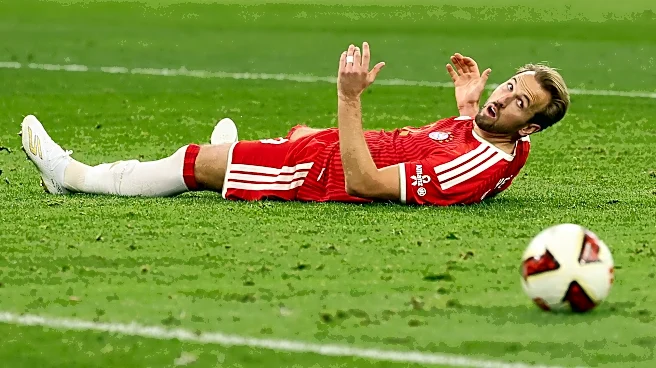


What's Happening?
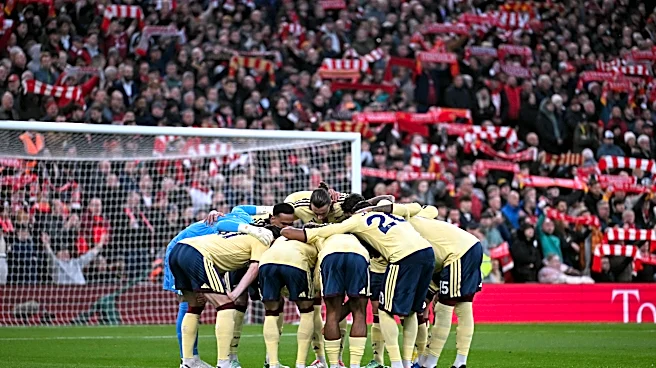
Arsenal midfielder Declan Rice is facing growing concerns over his fitness due to a demanding schedule, despite continuing to feature prominently for the club. During Arsenal's 2-1 victory over Slavia Prague, pundit Karen Carney noted that Rice appeared
'exhausted,' raising alarms about his physical condition. This comes after Rice played the entire match, just days after a strenuous game against Liverpool. Fans and analysts are drawing parallels to previous instances where Arsenal players, like Bukayo Saka, were heavily utilized, leading to subsequent injury spells. Rice has started all 13 of Arsenal's Premier League and Champions League matches this season, playing every minute in European competitions, and has only missed Carabao Cup games. His extensive play comes after a grueling 15 months, including significant involvement in the World Cup, where he played through illness and pain.
Why It's Important?
The management of Declan Rice's workload is crucial for Arsenal's performance and long-term success. Over-reliance on key players without adequate rest increases the risk of injuries, which can significantly impact team dynamics and results in critical competitions like the Premier League and Champions League. The situation highlights a broader issue in professional sports regarding player welfare versus competitive demands. If Rice were to suffer a significant injury, it would be a major blow to Arsenal, given his pivotal role in midfield. This scenario also raises questions about coaching strategies and squad rotation, especially when alternative players are available on the bench. The club's ability to manage player fitness effectively could determine their ability to sustain a title challenge and compete at the highest level throughout the season.
What's Next?
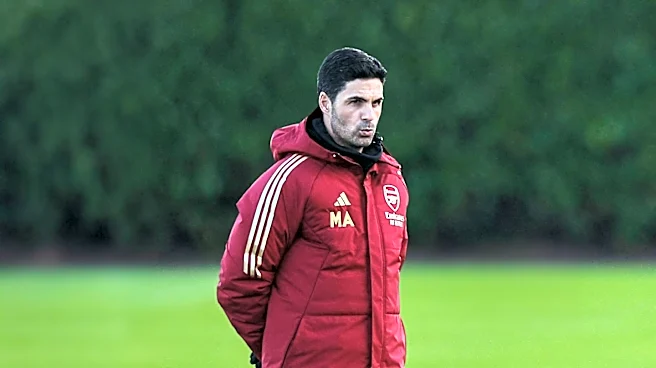
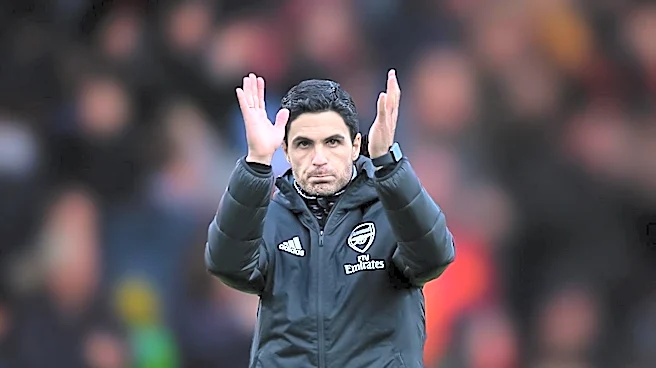
The immediate future will likely involve continued scrutiny of Mikel Arteta's team selection and substitution patterns, particularly concerning Declan Rice. With upcoming fixtures, including a match against Hull, there is an expectation from some fans and pundits that Rice should be rested to prevent further fatigue or potential injury. Arteta has previously acknowledged the need to manage Rice's fitness, indicating that the club is monitoring his condition. However, his decision to play Rice for the full 90 minutes against Slavia Prague suggests a prioritization of immediate results. Future decisions regarding Rice's playing time will be closely watched, as they could signal Arsenal's approach to player management during a demanding season. The club will need to balance competitive ambitions with the long-term health of its key players.
Beyond the Headlines
The ongoing discussion around Declan Rice's workload extends beyond individual player management to broader ethical considerations in professional sports. It touches upon the pressure on athletes to perform consistently at peak levels, the commercial demands placed on top clubs, and the responsibility of coaching staff to protect players from burnout and long-term health issues. The comparison to Bukayo Saka's past injury struggles serves as a cautionary tale, emphasizing the potential long-term consequences of overplaying young talents. This situation could spark further debate within football about player welfare policies, the role of sports science in managing athlete loads, and the balance between winning and ensuring the longevity of players' careers. It also highlights the psychological toll that constant high-stakes competition can have on athletes, beyond just physical exhaustion.