







What's Happening?
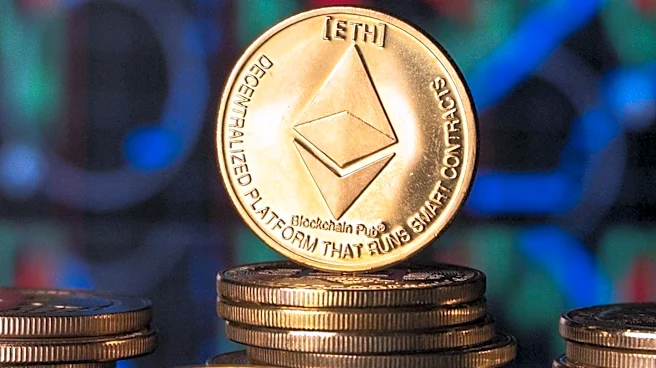
Ethereum (ETH) experienced a 16% price decline in October, breaking a three-month winning streak, with its price hovering around $2,200. This downturn is largely attributed to record outflows from US spot ETH Exchange-Traded Funds (ETFs), which saw $1.61
billion in withdrawals—the largest monthly outflow since their launch in July 2024. Throughout October, these ETFs recorded only three days of minor inflows. In contrast, Bitcoin (BTC) ETFs experienced $515 million in net outflows during the same period. Adding to the market pressure, a $6.3 billion hack on Binance by North Korean hackers further impacted ETH's performance, briefly pushing its price below $2,200 and triggering over $400 million in futures liquidations. Despite these significant challenges, BitMine Immersion Technologies Chairman Thomas Lee noted a relatively muted market reaction to the Binance hack compared to previous large-scale crypto thefts, suggesting increased market resilience. BitMine itself acquired 8,537 ETH last week, bringing its total holdings to 6.06 million ETH, nearing its goal of owning 5% of Ethereum's circulating supply.
Why It's Important?
The record outflows from US spot ETH ETFs signal a significant shift in institutional investor sentiment towards Ethereum. This withdrawal of capital indicates a weakened institutional demand, which has historically been a crucial support pillar for ETH's price. The substantial outflows, coupled with the price drop, suggest a negative feedback loop where declining prices further deter investors. The Binance hack, while a major security incident, saw a less severe market reaction than previous breaches, as highlighted by BitMine's Chairman Thomas Lee. This muted response could indicate a maturing crypto market that is becoming more resilient to large-scale security events, partly due to exchanges like Binance demonstrating the ability to cover substantial losses. However, it also reinforces concerns about the vulnerabilities inherent in centralized custody solutions. The ongoing accumulation of ETH by entities like BitMine, despite market headwinds, suggests a long-term bullish outlook from some major players, creating a dynamic tension between institutional selling and strategic accumulation.
What's Next?
Ethereum's immediate future will likely be influenced by several factors, including continued institutional investor behavior regarding ETFs and the broader market's reaction to ongoing security concerns. The price of ETH is currently testing a critical support range between $2,204 and $2,256. A sustained break below this level could expose further bearish targets at $2,107, $1,971, and $1,827. Conversely, overcoming immediate resistance levels clustered around the 100- and 20-day Exponential Moving Averages and the $2,355 horizontal barrier could signal a potential recovery. The market will also closely watch Binance's ongoing efforts to fully restore confidence and implement enhanced security measures following the hack. The upcoming Glamsterdam upgrade, which was delayed for contract review, will also be a key event, as its successful implementation could provide a positive catalyst for network development and investor confidence. Furthermore, the US midterm elections and the October jobs report are macro events that could introduce volatility to the broader crypto market, including Ethereum.
Beyond the Headlines
The current market dynamics for Ethereum highlight a deeper struggle between traditional financial instruments and the decentralized ethos of cryptocurrency. The significant ETF outflows suggest that institutional investors, while initially embracing crypto, remain sensitive to market volatility and security risks, potentially viewing ETH as a higher-risk asset during uncertain times. This contrasts with the continued accumulation by crypto-native firms like BitMine, which see long-term value and resilience in the Ethereum network despite short-term setbacks. The relatively muted market reaction to the Binance hack, despite its scale, could signify a growing maturity in the crypto ecosystem, where participants are better equipped to absorb shocks. However, it also underscores the persistent challenge of securing centralized exchanges against sophisticated attacks, raising ongoing questions about the balance between convenience and security in the crypto space. The incident may accelerate calls for more robust regulatory frameworks and enhanced security protocols across the industry to protect investor assets and foster broader adoption.