
What's Happening?
The costs associated with edge computing are escalating significantly as more workloads, including applications, databases, containers, hypervisors, computer vision, and artificial intelligence, are being
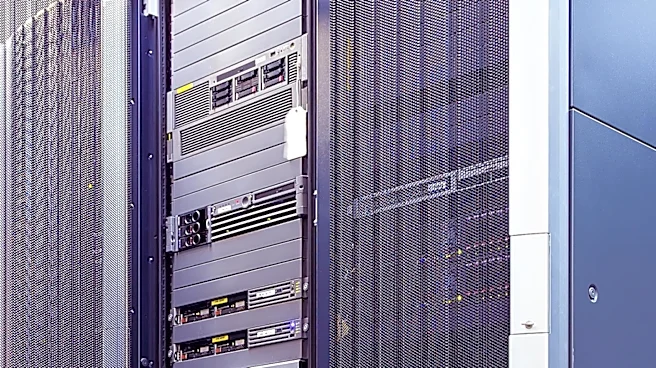
deployed at the edge. This trend is leading to the creation of what are essentially 'mini data centers' at numerous locations, a model that is proving to be economically unsustainable. The current approach of replicating complex data center infrastructure at every edge site is driving up expenses and complexity. Industry leaders like Zebra and Elo are now advocating for a re-evaluation of edge computing strategies, emphasizing the need to 'right-size' the edge for specific workloads. This involves deploying simpler servers, container clusters, local applications, or powerful Edge AI compute solutions that offer a smaller footprint, reduced complexity, and significantly lower infrastructure costs, while still providing the necessary scalability.
Why It's Important?
The spiraling costs of edge computing pose a significant challenge for U.S. businesses across various sectors, particularly retail, manufacturing, and logistics, which are increasingly relying on edge deployments for real-time operations and data processing. If these costs continue unchecked, it could hinder the widespread adoption of critical technologies like AI and computer vision at the edge, limiting innovation and operational efficiency. The current model's unsustainability means that companies might struggle to scale their edge initiatives, impacting their ability to gain competitive advantages through localized intelligence and faster decision-making. A shift towards right-sizing the edge is crucial for making these advanced technologies economically viable and accessible, allowing businesses to bring compute and intelligence closer to where operations happen without incurring prohibitive data center-level expenses. This re-evaluation is essential for ensuring that the benefits of edge computing, such as reduced latency and enhanced data privacy, can be realized without compromising financial sustainability.
What's Next?
The industry is moving towards more optimized and cost-effective edge computing solutions. This will involve a greater focus on modular and scalable hardware, as well as software-defined infrastructure that can adapt to varying workload demands without requiring extensive on-site resources. Companies will likely invest in solutions that allow for flexible deployment, from simple servers for basic tasks to more powerful Edge AI compute for complex analytics. The emphasis will be on reducing the physical footprint and operational overhead at each edge location. Furthermore, there will be an increased demand for integrated solutions that combine hardware and software to simplify management and reduce complexity. This strategic shift aims to enable businesses to expand their edge deployments more economically, ensuring that they can leverage localized intelligence and real-time processing capabilities without being constrained by escalating infrastructure costs. Collaboration between technology providers will be key to developing these streamlined and efficient edge solutions.
Beyond the Headlines
The economic challenges in edge computing highlight a broader tension between technological advancement and practical implementation. While the benefits of processing data closer to the source are clear, the current cost trajectory could create a digital divide, where only large enterprises can afford extensive edge deployments. This could stifle innovation among smaller businesses and limit the societal benefits of widespread edge intelligence. The push for 'right-sizing' the edge also underscores the importance of efficient resource allocation and sustainable technology development. It encourages a more thoughtful approach to infrastructure design, moving away from a 'one-size-fits-all' mentality towards tailored solutions that meet specific operational needs. This evolution could also lead to new service models, where edge computing resources are offered on a more flexible, consumption-based model, further democratizing access to advanced localized processing capabilities and fostering a more resilient and adaptable technological landscape.