


What's Happening?
The Seattle Mariners are approaching a critical non-tender deadline on Friday at 2 p.m. PT, which will impact arbitration-eligible and pre-arbitration players. The team's 40-man roster currently stands at 38 players after electing not to protect any prospects
from the Rule-5 Draft. Several key players, including Julio Rodriguez, Cal Raleigh, and Andres Munoz, are under long-term contracts and are not affected by this deadline. However, a group of players, such as Logan Gilbert, George Kirby, and Luke Raley, require contract tenders. Among these, Luke Raley's position on the team appears most precarious. He is projected to earn approximately $3 million in arbitration but lacks a clear path to a starting outfield role, with Brendan Donovan, Julio Rodriguez, and Dominic Canzone currently slated as starters. The team also has other options for the designated hitter spot, and there's a possibility they might pursue another slugger in free agency, further complicating Raley's future with the Mariners.
Why It's Important?
These roster decisions are crucial for the Seattle Mariners as they shape their competitive outlook for the upcoming season. The non-tender deadline forces teams to evaluate player value against salary projections, directly impacting payroll flexibility and strategic team building. For players like Luke Raley, a non-tender could mean immediate free agency, offering them an opportunity to seek roles with other clubs. For the Mariners, shedding a player like Raley could free up salary space to pursue other acquisitions, such as a bullpen arm or another prospect, or to invest in a high-impact free agent. The outcome of these decisions will signal the team's priorities, whether it's cost-saving, acquiring specific skill sets, or making room for emerging talent. These moves can significantly influence team chemistry and performance, affecting fan engagement and the team's overall market value.
What's Next?
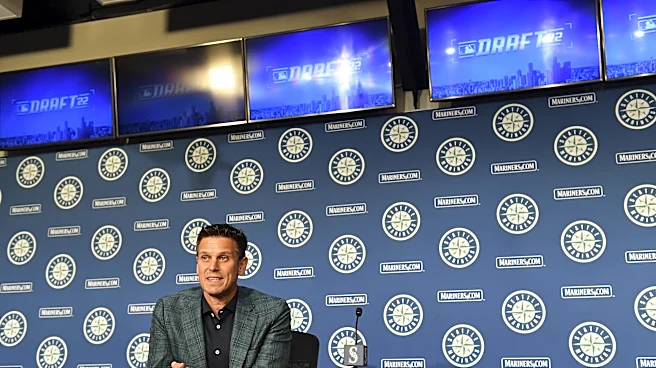
By Friday's 2 p.m. PT deadline, the Seattle Mariners will either tender contracts to their arbitration-eligible players or non-tender them, making those players free agents. For Luke Raley, potential outcomes include being non-tendered, which would allow him to sign with any team, or being traded before the deadline for a bullpen arm or a prospect, as suggested by the team's potential strategy. General Manager Jerry Dipoto's recent comments about seeking an outfielder capable of playing center field further indicate a potential shift in the team's outfield composition, which could directly influence Raley's status. The Mariners' decisions will clarify their roster for the immediate future and set the stage for further offseason moves, including potential free-agent signings or trades to fill any newly created roster spots or address specific team needs.
Beyond the Headlines
The impending non-tender deadline highlights the intricate balance MLB teams must strike between player development, financial management, and competitive aspirations. Decisions made at this juncture can have long-term implications beyond immediate roster adjustments. For players, the uncertainty surrounding arbitration and non-tenders can be a significant career turning point, influencing their market value and future earning potential. For teams, these deadlines are strategic chess moves, reflecting deeper organizational philosophies regarding player valuation, risk assessment, and commitment to specific team-building models. The potential departure of a player like Luke Raley, who has contributed to the team, also underscores the business side of professional sports, where individual player value is constantly re-evaluated against team needs and financial constraints, often leading to difficult but necessary personnel changes.