


What's Happening?
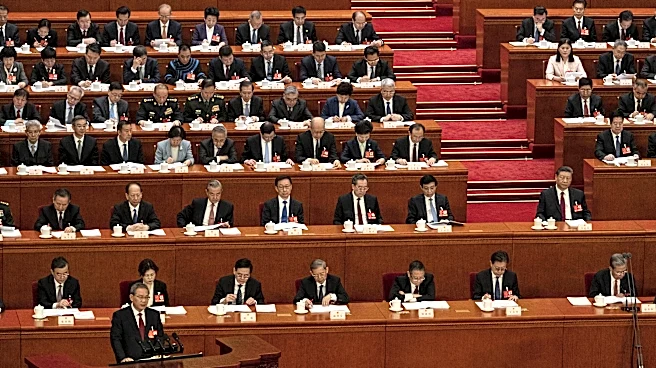
Chinese Premier Li Qiang recently chaired a State Council executive meeting focused on several key economic initiatives. The meeting reviewed efforts to promote high-quality development and discussed deepening comprehensive investment and financing reforms
within the capital market. A report on the national standards system development was also heard, alongside the approval of a draft regulation for investigating and rectifying potential workplace safety hazards. The Premier emphasized the need for solid efforts to address issues identified during inspections, ensuring that annual goals are met. Key directives included encouraging listed companies to increase dividends and share repurchases, leveraging state-backed funds like Central Huijin Investment Ltd. to stabilize the market, and optimizing liquidity. The meeting also stressed improving policies to guide long-term funds, such as insurance and social security funds, into the market, while enhancing defenses against imported risks. Furthermore, the importance of strengthening law-based supervision in the capital market to combat financial fraud and protect investors was highlighted.
Why It's Important?
This meeting underscores China's proactive approach to maintaining economic stability and fostering high-quality development amidst global uncertainties. The focus on capital market reforms, including encouraging dividends and share repurchases, aims to boost investor confidence and improve market functionality. By optimizing the role of state-backed funds and guiding long-term institutional investments, China seeks to create a more resilient and liquid market environment. This could have ripple effects on global financial markets, as a stable Chinese economy often contributes to broader international economic stability. The emphasis on strengthening supervision against financial fraud is crucial for market integrity and investor protection, which are foundational for sustainable economic growth. For U.S. businesses and investors, understanding these policy shifts is vital, as changes in China's capital markets can influence investment flows, supply chains, and overall global economic sentiment, potentially impacting U.S. corporate earnings and market performance.
What's Next?
Following the State Council executive meeting, China is expected to implement the discussed policies and measures to deepen capital market reforms and enhance economic development. This includes adjusting and improving existing policies that no longer align with high-quality development requirements, optimizing incentive and constraint mechanisms, and ensuring better policy coordination. Efforts will be made to strengthen counter-cyclical adjustments and address critical reform tasks simultaneously. The government plans to improve market-stabilizing mechanisms, fully utilize existing policies, and introduce new measures to promote steady and sound development of the capital market. Additionally, there will be a systematic improvement of the standards system, including the abolition of local standards that do not meet national market requirements and a forward-looking approach to planning standards for emerging industries. In terms of workplace safety, the focus will be on key industries and sectors to prevent serious accidents.
Beyond the Headlines
The comprehensive nature of the State Council meeting, addressing capital market reforms, high-quality development, and workplace safety, reflects a broader strategic vision for China's economic future. The push for listed companies to pay more dividends and conduct share repurchases, coupled with the strategic deployment of state-backed funds, suggests a move towards a more mature and investor-friendly capital market, potentially attracting more foreign investment. The emphasis on strengthening law-based supervision against financial fraud highlights a commitment to transparency and accountability, which are critical for long-term market health. Furthermore, the focus on developing a multi-tiered capital market and improving the national standards system indicates an ambition to enhance industrial competitiveness and innovation. These developments could lead to a more robust and regulated Chinese economy, influencing global trade dynamics, technological advancements, and international investment patterns, with potential implications for U.S. economic policy and corporate strategies.