





What's Happening?
The Association of Equipment Manufacturers (AEM) has released a new whitepaper titled 'AI in Agriculture Equipment: Supporting Productivity, Efficiency, and Decision-Making Through Technology.' This paper examines how artificial intelligence is becoming
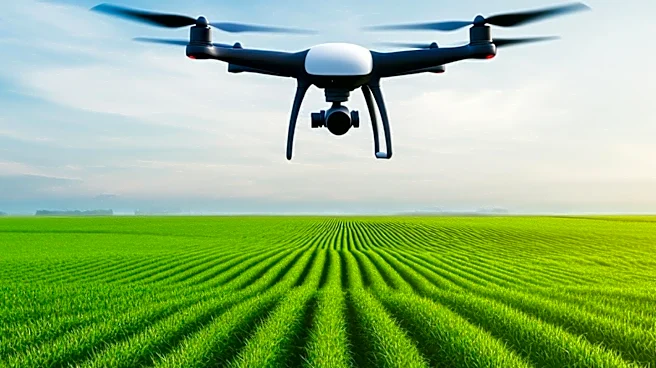
a fundamental component of agricultural equipment, assisting farmers in addressing complex operational challenges. The whitepaper details three levels of AI integration: Assist-Level AI, which supports operators with guidance systems and automated functions; Advise-Level AI, which analyzes data to provide recommendations; and Act-Level AI, enabling machines to execute tasks with greater autonomy, such as targeted spray applications. The paper also discusses the importance of responsible AI deployment through established standards and safety frameworks, and highlights real-world applications like operator decision support, predictive maintenance, and precision spraying.
Why It's Important?
The integration of AI into agricultural equipment is a significant development for the U.S. agricultural industry, which faces increasing pressure to produce more with fewer resources. This technology promises to enhance productivity, efficiency, and decision-making for farmers, contributing to a more resilient and competitive agricultural sector. By enabling more precise operations and data-driven insights, AI can help optimize resource use, reduce waste, and improve crop yields. This is crucial for ensuring food security and maintaining the economic viability of farming operations across the nation. The emphasis on responsible deployment also addresses concerns about safety and ethical use of advanced technology in a critical industry.
What's Next?
The AEM whitepaper suggests that AI-enabled equipment will play an increasingly vital role in supporting a sustainable agricultural industry. Farmers and agricultural businesses are expected to continue adopting these technologies to respond to changing conditions in real-time and improve operational outcomes. Further development and refinement of AI applications in agriculture will likely focus on enhancing autonomy, improving data analysis capabilities, and ensuring seamless integration with existing farm management systems. The industry will also continue its work on establishing robust standards and safety frameworks for AI deployment to maximize benefits while mitigating potential risks.
Beyond the Headlines
The shift towards AI-driven agricultural equipment represents a broader technological transformation in the food production system. This evolution has implications beyond immediate productivity gains, potentially leading to significant changes in agricultural labor requirements, land management practices, and environmental impact. The ability of AI to turn data into actionable insights could foster a new era of precision agriculture, where every input is optimized, leading to more sustainable farming practices. However, it also raises questions about data ownership, digital literacy among farmers, and the potential for increased capital investment requirements, which could impact smaller farming operations.