





What's Happening?
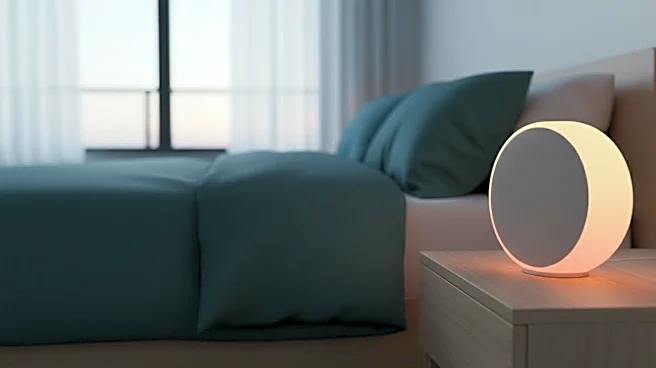
Hatch has launched its new Sleep Clock, a bedside device designed to monitor sleep patterns without requiring users to wear a device. This product aims to shift the focus from daily sleep scores to the development of healthier sleep habits and routines.
The Hatch Sleep Clock utilizes built-in sensors to detect micro-movements and breathing patterns from a nightstand, providing contactless sleep tracking. It integrates personalized insights, a sound machine, and a sunrise alarm, functioning as an all-in-one bedside sleep system. The device is positioned as an alternative to traditional wearable sleep trackers, emphasizing a phone-free sleep experience and habit-based sleep improvement. Users can access an expanded audio library with a Hatch+ subscription, which includes over 2,500 sounds, meditations, and sleep stories.
Why It's Important?
The introduction of the Hatch Sleep Clock signifies a notable shift in the sleep technology market, moving away from the prevalent 'sleep score' metric towards a more holistic, routine-based approach to sleep improvement. This is important for consumers who may experience anxiety or pressure from daily performance metrics provided by traditional wearables. By focusing on habit formation and a phone-free environment, Hatch addresses concerns about excessive screen time and the potential for sleep tracking to become another source of stress. This approach could lead to more sustainable and less intrusive methods of improving sleep hygiene, potentially benefiting a broader demographic, including those who find wearables uncomfortable or inconvenient. The device's multi-functionality also offers a consolidated solution, reducing clutter and simplifying the bedtime routine for users.
What's Next?
The Hatch Sleep Clock is now available, offering contactless sleep tracking, personalized insights, and a nightly plan. New users have the option to try Hatch+ free for 30 days to access an expanded audio library. The company will likely monitor user adoption and feedback to refine its offerings and potentially expand its ecosystem of sleep-enhancing products. The success of this routine-focused approach could influence other sleep technology companies to reconsider their emphasis on quantitative metrics, potentially leading to a broader industry trend towards qualitative and habit-forming solutions. Consumers can expect to see continued marketing efforts highlighting the benefits of a phone-free and routine-centric sleep experience.
Beyond the Headlines
This product taps into a growing societal awareness regarding the psychological impact of constant performance tracking and digital overload. By de-emphasizing 'sleep scores,' Hatch is implicitly challenging the notion that every aspect of life needs to be quantified and optimized through metrics. This could foster a healthier relationship with technology and self-improvement, encouraging users to focus on process and well-being rather than just outcomes. The emphasis on sensory rituals, such as calming sounds and intentional touch during product use, aligns with neurocosmetics principles, suggesting a deeper understanding of the connection between the nervous system and overall well-being. This approach could pave the way for more integrated wellness technologies that prioritize mental and emotional states alongside physical health.