

What's Happening?
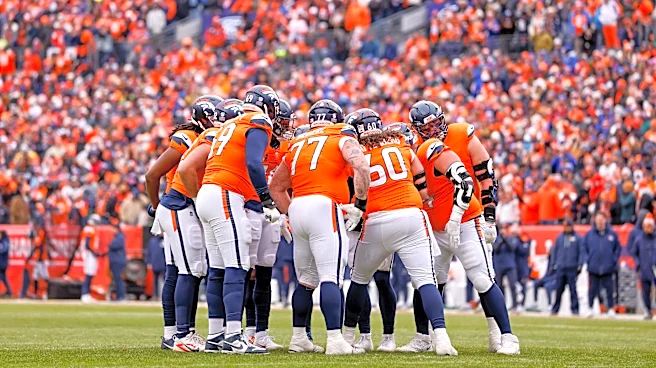
The NFL has announced its disciplinary actions following the Week 9 game between the Denver Broncos and the Carolina Panthers. Notably, Broncos linebacker Alex Singleton and defensive lineman Zach Allen, who were flagged for infractions during the game,
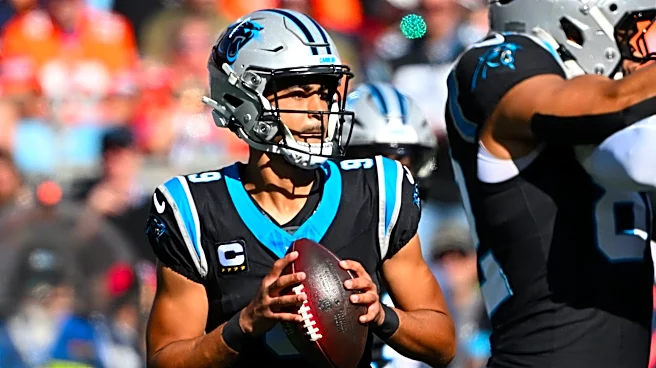
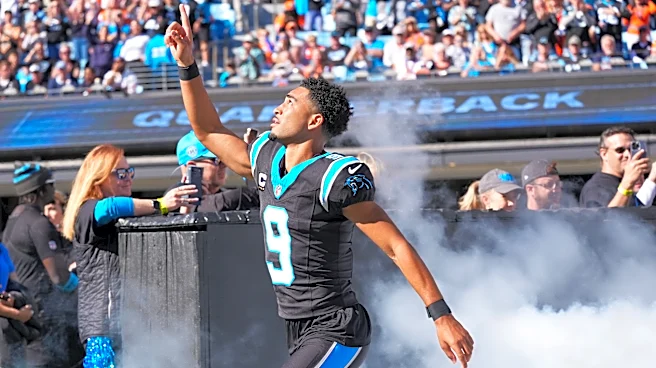
did not receive fines. Singleton was called for "unnecessary roughness" after a hit on Panthers running back Chuba Hubbard, which could have resulted in a $17,911 fine and added to his existing list of incidents. Allen was flagged for roughing the passer against Bryce Young, an infraction that also typically carries a $17,911 fine. Despite these penalties, both players were spared financial penalties. Conversely, Panthers cornerback Zakee Wheatley was fined $5,626 for "unnecessary roughness" due to a hit on a defenseless player, even though he was not flagged on the play itself. Wheatley's teammate, Marco Wilson, was flagged twice during the game for pass interference and taunting but did not receive a fine for taunting, which usually ranges from $11,941 to $17,911.
Why It's Important?
The NFL's decision to not fine Alex Singleton and Zach Allen, despite their on-field penalties, carries significance for the Denver Broncos, potentially saving the players substantial amounts of money and avoiding further disciplinary action for Singleton, who has a history of fines this season. This outcome could influence player behavior and the league's enforcement consistency, as players might perceive a degree of leniency in certain situations. For the Carolina Panthers, the fine issued to Zakee Wheatley, coupled with the lack of fines for the Broncos' players, highlights the subjective nature of NFL officiating and post-game review. Wheatley's fine, particularly for a play where he wasn't flagged, underscores the league's commitment to player safety, especially concerning hits on defenseless players. The absence of a fine for Marco Wilson's taunting penalty, despite the established fine structure for such infractions, raises questions about the consistent application of rules and penalties across the league, potentially impacting player conduct and sportsmanship standards.
What's Next?
Zakee Wheatley has the option to appeal his $5,626 fine for "unnecessary roughness." If his appeal is unsuccessful, the fine will stand, and he will carry a strike towards a potential one-game suspension if he accumulates two more infractions of the same nature. This situation will require Wheatley to be particularly cautious in future games to avoid further penalties that could lead to a suspension. For the Denver Broncos, the absence of fines for Alex Singleton and Zach Allen means they avoid immediate financial penalties and additional disciplinary concerns, allowing them to focus on upcoming games without the distraction of appeals or escalating fines. The NFL will continue to monitor player conduct and issue fines as deemed necessary, with each incident reviewed on a case-bycase basis. The league's decisions in these matters will continue to shape player behavior and the enforcement of on-field rules.
Beyond the Headlines
The NFL's selective application of fines, particularly the exemption of Broncos players despite clear penalties, could spark broader discussions about fairness and consistency in league disciplinary actions. This situation might lead to increased scrutiny from players, coaches, and the media regarding how penalties are assessed and how fines are ultimately decided. The discrepancy between on-field flags and post-game fines, as seen with Wheatley being fined without a flag and Wilson not being fined for a flagged taunting penalty, highlights the complex and often opaque nature of the NFL's disciplinary process. This could fuel debates about the transparency of the league's review system and whether it adequately addresses player safety and sportsmanship while maintaining an equitable standard for all teams and players. Such inconsistencies can impact player morale and public perception of the league's integrity.