




What's Happening?
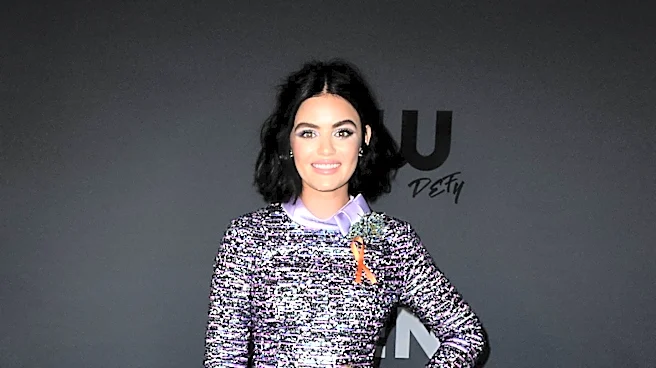
Actress Lucy Hale has clarified the intent behind a recent reunion video with her former 'Pretty Little Liars' co-star Ian Harding, which sparked criticism for seemingly romanticizing their characters' 'problematic' relationship. Hale, who played Aria
Montgomery, stated on Instagram Stories that the video was meant to celebrate her long-standing friendship with Harding, not to glamorize the fictional romance between a high school student and her 22-year-old teacher, Ezra Fitz. She acknowledged that the storyline, which aired from 2010 to 2017, 'did not age well' and is now widely considered problematic due to its depiction of a student-teacher relationship. Hale emphasized that she and Harding were teenagers when they began the show and have maintained a close friendship for nearly two decades. The clarification came after negative comments arose following the video's posting on October 25.
Why It's Important?
This incident highlights the evolving societal understanding and increased scrutiny of fictional portrayals of relationships, particularly those involving significant age or power imbalances. The backlash against the reunion video underscores a broader cultural shift where audiences are re-evaluating past media content through a contemporary lens, often leading to discussions about ethical representation and the potential for glamorizing harmful dynamics. For actors and creators, it emphasizes the need for sensitivity and awareness when revisiting or referencing older works, especially those that may now be perceived as problematic. The public's reaction also reflects a growing demand for accountability and responsible storytelling in the entertainment industry, influencing how content is produced, promoted, and interpreted.
What's Next?
Hale has indicated that if the original 'Pretty Little Liars' cast were to return for a follow-up series, addressing the controversial relationship between Aria and Ezra would be a priority. This suggests a potential shift in how such storylines might be handled in future productions, reflecting current societal values. The ongoing discussion around this issue may prompt other actors and creators to be more proactive in addressing or recontextualizing past roles that could be viewed as problematic. It also sets a precedent for how public figures navigate social media interactions and fan engagement, requiring careful consideration of how their actions might be interpreted in the context of their past work.
Beyond the Headlines
The controversy surrounding Hale's reunion video touches upon deeper themes of media literacy and the impact of fictional narratives on real-world perceptions. It raises questions about the responsibility of creators to consider the long-term implications of their storylines and how these narratives contribute to societal norms. The re-evaluation of 'Aria and Ezra's' relationship as 'problematic' reflects a broader cultural reckoning with issues like predatory grooming and power dynamics, moving beyond the 'forbidden romance' trope. This shift indicates a growing collective consciousness that demands more nuanced and ethically sound portrayals in popular culture, influencing not only what is created but also how audiences engage with and interpret media.