

What's Happening?
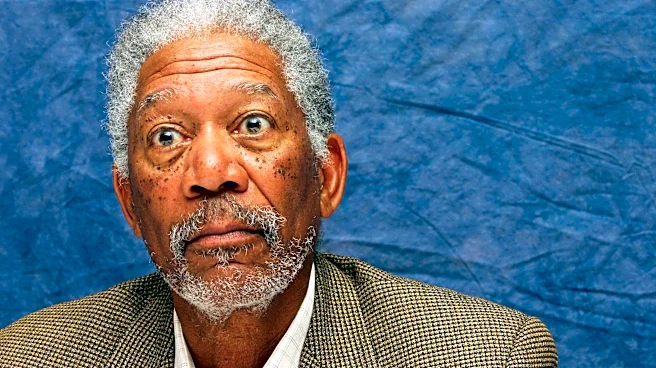
Maryann Castle, the former daughter-in-law of actor Morgan Freeman, has publicly stated that his three grandchildren are on the verge of homelessness after Freeman allegedly refused her pleas for financial assistance. Castle, who was married to Freeman's
son Saifoulaye Freeman for 11 years, claims she fled an abusive relationship and is now living in emergency housing with her three children: Zaharah, 6, Aaliyaah, 8, and Abdullah, 14. According to RadarOnline.com, Castle requested $5,000 from Freeman to prevent eviction and secure a safe home. She reportedly reached out to Freeman directly and subsequently to his business advisor, but received a response stating that Freeman would not be able to assist her. Castle expressed feeling that Freeman 'doesn't care about the children' based on his response. She also claims that Freeman has never met these three grandchildren, despite being aware of their existence.
Why It's Important?
This situation highlights the complex dynamics of family support, particularly when significant wealth is involved. The alleged refusal of financial aid from a prominent public figure like Morgan Freeman, especially when it concerns his grandchildren facing homelessness, can draw considerable public scrutiny and debate about personal responsibility and familial obligations. For the children involved, the immediate impact is severe, as they are reportedly living in emergency housing after fleeing an abusive situation. This also brings to light the challenges faced by individuals escaping domestic violence, who often struggle with financial instability and housing insecurity. The story could spark discussions about the role of extended family in supporting vulnerable members and the ethical considerations for wealthy individuals when family members are in dire need.
What's Next?
It remains to be seen if Morgan Freeman or his representatives will issue a public statement in response to Maryann Castle's claims. The immediate next steps for Castle and her children will likely involve continuing to seek stable housing and financial support from other sources, potentially including social services or other family members. The public nature of these allegations could lead to increased pressure on Freeman to address the situation, either privately or publicly. There is also the possibility that this public disclosure could prompt further legal or familial discussions regarding the welfare and support of the grandchildren. The story may also encourage broader conversations about the support systems available for families experiencing domestic violence and homelessness.
Beyond the Headlines
Beyond the immediate family dispute, this incident touches upon broader societal issues concerning wealth disparity and the perceived moral obligations of the affluent. It raises questions about the extent to which individuals, particularly those with significant resources, are expected to support their extended family members, especially in times of crisis. The narrative also underscores the often-hidden struggles of families impacted by domestic violence, where financial instability frequently compounds the trauma. The alleged lack of a relationship between Freeman and these grandchildren, as claimed by Castle, also points to potential complexities within family structures, where biological ties do not always translate into active involvement or support. This situation could serve as a case study in public discourse regarding celebrity responsibility and the ethics of family support.