


What's Happening?
The rustic aesthetic is characterized by its use of natural materials, warm earth tones, and organic elements. This design approach is evident in various home decor applications, such as the Crossville tiny house, which features wooden accent walls, pine
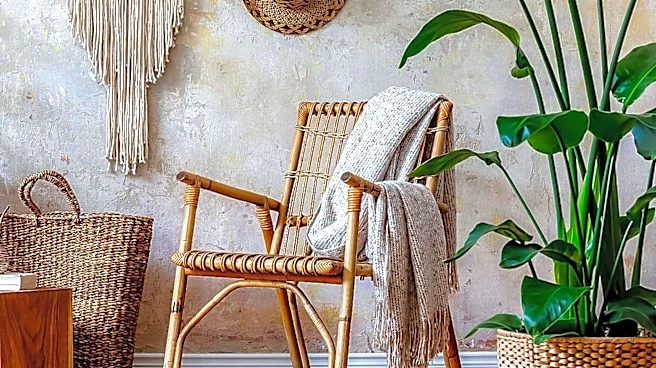
flooring, and black trim. The 'Dusty West Trails' living room design further exemplifies this aesthetic with weathered wood and leather accents, creating a cozy and inviting atmosphere. The color palette predominantly includes warm browns, beige, and muted greens, complementing natural leather and wood textures. Decorative elements often include natural-themed paintings, sculptural accents, and green plants to enhance the organic feel. The emphasis is on creating a tactile connection to nature and a sense of warmth and authenticity within living spaces.
Why It's Important?
The growing popularity of the rustic aesthetic reflects a broader consumer desire for comfort, authenticity, and a connection to nature in their living environments. This trend impacts the home decor and furniture industries, driving demand for products made from natural materials like wood and leather, as well as items with weathered or handcrafted appearances. For businesses, understanding and catering to this aesthetic can lead to increased sales in specific product categories, from furniture to decorative accents and even building materials. Homeowners benefit from creating spaces that offer a sense of tranquility and escape from modern life, potentially influencing well-being and lifestyle choices. The focus on natural and durable materials also aligns with a growing interest in sustainable and long-lasting home solutions.
What's Next?
The rustic aesthetic is expected to continue influencing home design and product development. Manufacturers and retailers will likely expand their offerings of furniture, decor, and building materials that embody this style, focusing on sustainable sourcing and craftsmanship. DIY projects, such as transforming simple items with natural elements like river rocks, are also gaining traction, indicating a consumer interest in personalized and cost-effective ways to achieve the rustic look. Designers may explore new interpretations of the rustic aesthetic, potentially blending it with other styles to create unique and evolving trends. The emphasis on natural textures and warm color palettes is likely to remain a key feature, adapting to broader shifts in design preferences while retaining its core appeal.
Beyond the Headlines
Beyond its immediate impact on home aesthetics, the rustic trend reflects a deeper cultural yearning for simplicity and a return to foundational elements. In an increasingly digital and fast-paced world, the tactile and visual comfort offered by natural materials and earthy tones can provide a psychological anchor. This aesthetic can also be seen as a form of escapism, allowing individuals to create personal sanctuaries that evoke a sense of calm and connection to the natural world. The emphasis on durability and timelessness inherent in rustic design also challenges the rapid consumption cycles often associated with modern trends, potentially fostering a more mindful approach to home furnishing and decoration. This shift could lead to a greater appreciation for artisanal crafts and locally sourced materials, impacting small businesses and regional economies.