








What's Happening?
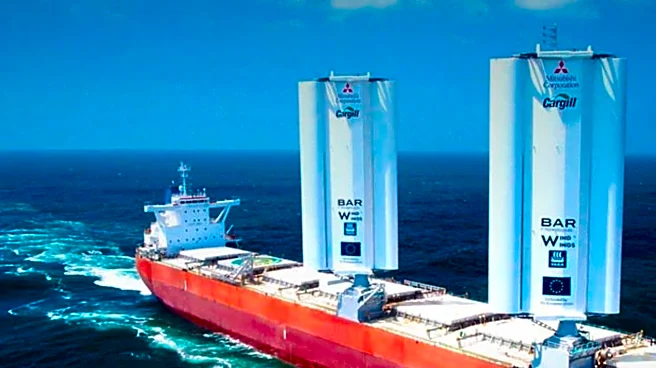
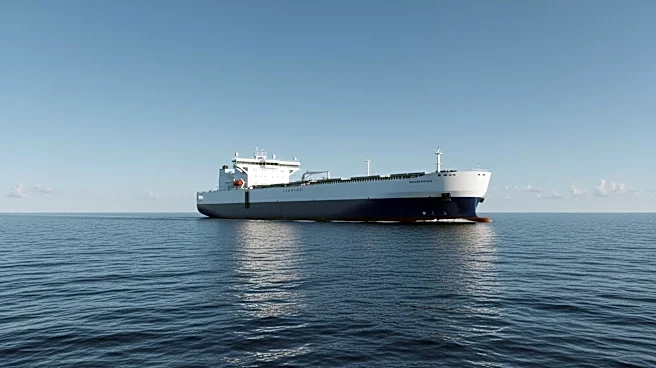
Oceanbird, a joint venture between Alfa Laval and Wallenius Lines, has successfully installed its first wing-sail on a car carrier, marking a significant advancement in wind-assisted propulsion technology. The installation took place on the vessel Tirranna
at the Damen Shipyard in Rotterdam between June 21 and 24. The Tirranna, with a capacity to transport 7,620 cars, has completed both harbor and sea acceptance tests as of July 1. This development is part of the EU-funded Orcelle Horizon project, which aims to create a new generation of large RoRo vessels that derive up to 50% of their propulsion power from wind. The wing-sail, standing 46 meters tall and 14 meters wide, is expected to deliver around 10% energy efficiency gains. It is equipped with sensors and control systems to gather data and validate performance under real operating conditions.
Why It's Important?
The installation of the wing-sail on the Tirranna represents a pivotal step towards reducing the carbon footprint of the maritime industry. By harnessing wind power, Oceanbird aims to significantly cut down on fuel consumption and emissions, aligning with global efforts to combat climate change. This innovation could lead to substantial cost savings for shipping companies and contribute to more sustainable maritime operations. The success of this prototype could pave the way for broader adoption of wind propulsion systems across various shipping sectors, potentially transforming the industry and setting new standards for environmental responsibility.
What's Next?
Following the successful installation and initial testing, Oceanbird plans to continue monitoring the performance of the wing-sail on the Tirranna. A team will collect data on its efficiency and usage under real-world conditions. The company is also planning another installation in the spring of 2027 on an undisclosed vessel, which will feature two Wing 560s to further expand testing. These steps are crucial for validating the technology and moving towards commercializing wind propulsion systems for a global fleet. The outcomes of these tests will likely influence future designs and implementations of wind-assisted propulsion in the maritime industry.