




What's Happening?
Lebanese designer Salim Azzam, known for his eponymous label, has expanded his brand into homeware, maintaining a strong connection to the traditional craftsmanship of his village. Azzam launched his label in 2016, aiming to bring the skills of local
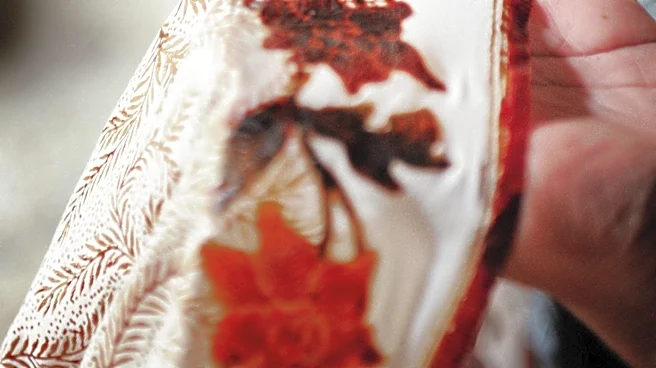
women to a wider audience through distinctive embroidered designs. A decade later, his brand has achieved international recognition, yet its identity remains deeply rooted in the village where his creative journey began. He has further strengthened this connection by establishing Dar Salim Azzam in his childhood home, which serves as an atelier, archive, and space for future projects. Azzam's work is characterized by playful illustrations, rich storytelling, and intricate handwork, reflecting the birds, flowers, and trees of his upbringing. He views fashion as a medium to preserve and share his culture's stories, allowing the craft to evolve while respecting its origins.
Why It's Important?
Salim Azzam's expansion into homeware, while preserving traditional Lebanese embroidery, highlights a significant trend in the U.S. and global markets: the increasing demand for authentic, handcrafted goods with a compelling story. This approach resonates with U.S. consumers who are increasingly seeking products that offer cultural depth, ethical production, and a connection to artisanal heritage, moving away from mass-produced items. For U.S. industries, this trend could encourage collaborations with international artisans and a greater appreciation for traditional crafts, potentially influencing design aesthetics and sourcing practices in the home goods sector. It also underscores the economic importance of supporting local communities and preserving cultural heritage through commerce, offering a model for sustainable business practices that prioritize people and craft over rapid growth. The emphasis on storytelling and the unique narrative behind each piece adds significant value, appealing to a discerning consumer base.
What's Next?
The continued success of designers like Salim Azzam in integrating traditional craftsmanship with contemporary design suggests a growing market for culturally rich homeware and lifestyle products. This could lead to more U.S. retailers and designers exploring partnerships with international artisan communities, fostering cross-cultural collaborations. There may also be an increased focus on transparency in supply chains, as consumers become more interested in the origins and makers of their products. Azzam's commitment to continuity and ensuring the craft lives on, potentially by engaging younger generations, points to a future where traditional skills are actively preserved and adapted for modern contexts. This could inspire educational initiatives and mentorship programs in the U.S. aimed at revitalizing traditional crafts and promoting artisanal entrepreneurship.
Beyond the Headlines
Azzam's work transcends mere product creation; it represents a powerful act of cultural preservation and community empowerment. By building a business around traditional craftsmanship, he challenges the fast-fashion paradigm and promotes a more thoughtful, sustainable approach to consumption. This has profound ethical implications, as it highlights the value of human skill and heritage in an increasingly automated world. For the U.S., this movement could foster a deeper appreciation for the cultural significance of everyday objects and encourage consumers to consider the social and environmental impact of their purchases. It also speaks to the universal human desire for connection to roots and authenticity, suggesting that products with a genuine story and a positive social impact will continue to gain traction in the market.