






What's Happening?
Oil prices have experienced a significant rebound, climbing over 4% due to renewed tensions in the Middle East and a drawdown in U.S. crude inventories. Brent crude increased by 4.41% to $87.80 per barrel, while U.S. West Texas Intermediate rose by 4.23%
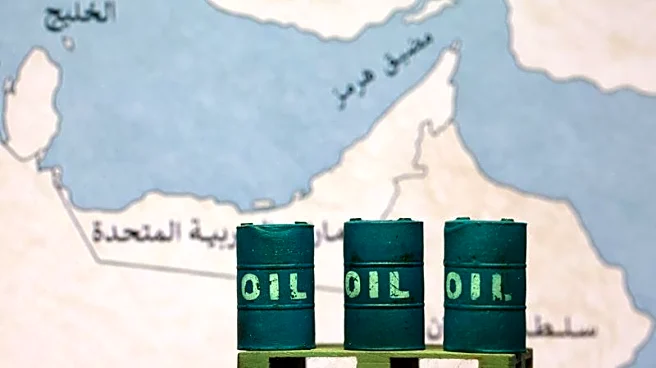
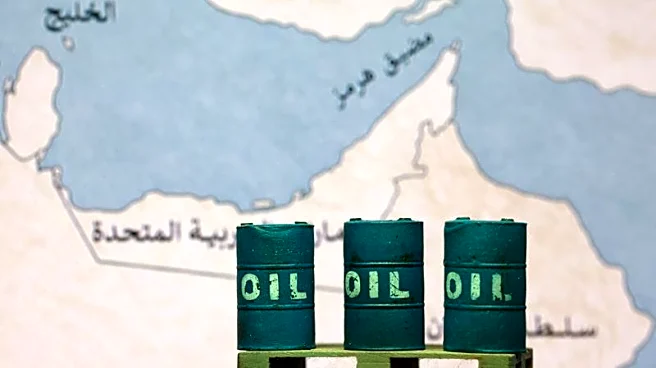
to $82.61 per barrel. The market had previously seen a decline due to hopes of diplomatic engagement between the U.S. and Iran, but these hopes were dashed as regional security concerns resurfaced. The Strait of Hormuz, a critical oil shipping route, remains a focal point of concern, with potential disruptions threatening to increase energy costs and inflationary pressures globally. Additionally, Saudi Arabia and the U.S. have conducted joint airstrikes on Iran-backed targets in Iraq following drone attacks on Saudi oil facilities.
Why It's Important?
The rise in oil prices highlights the volatility of global energy markets, particularly in response to geopolitical tensions. The Strait of Hormuz is a vital chokepoint for global oil supplies, and any disruption could have significant implications for energy prices and economic stability worldwide. The situation underscores the interconnectedness of global markets and the potential for regional conflicts to impact global supply chains. The involvement of major powers like the U.S. and Saudi Arabia in military actions further complicates the geopolitical landscape, potentially leading to broader economic and political consequences.
What's Next?
The ongoing tensions in the Middle East are likely to keep oil markets on edge, with potential for further price fluctuations depending on the developments in the region. Stakeholders, including governments and businesses, will need to monitor the situation closely and prepare for possible disruptions in oil supplies. The actions of OPEC+ in response to these developments, such as potential adjustments to production targets, will also be critical in shaping the future of oil markets.