




What's Happening?
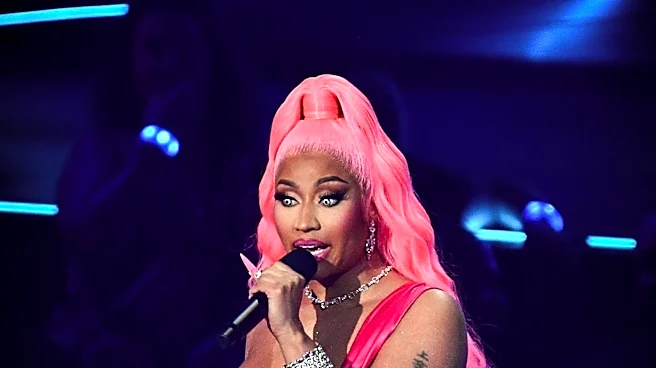
Nicki Minaj is facing legal challenges on two fronts as her current attorneys in New York are seeking to withdraw from a concert production lawsuit, and a former law firm in Los Angeles is pursuing over $295,000 in allegedly unpaid legal fees. In New York,
Kurzman Eisenberg Corbin & Lever has requested permission from a judge to cease representing Minaj in a $275,000 lawsuit filed by 24/7 Productions. This company alleges that Minaj and her team failed to reimburse expenses for her 2023 iHeartRadio Jingle Ball appearances and 'Pink Friday 2' promotional events. The law firm cited an 'irretrievably broken down' relationship due to disagreements over litigation strategy and communication issues. Attempts to serve Minaj with withdrawal papers have reportedly been unsuccessful. Concurrently, in Los Angeles, Gordon Rees Scully Mansukhani has renewed its efforts to recover approximately $295,605 in unpaid legal fees, late charges, and expenses from Minaj. This stems from their representation of her in a copyright dispute concerning her 2014 song 'I Lied,' which concluded with a confidential settlement in 2024. Gordon Rees filed suit in March after Minaj allegedly failed to pay for services and is now seeking a default judgment due to her lack of response to their collection lawsuit.
Why It's Important?
These legal disputes highlight potential operational and financial challenges for high-profile artists in managing their professional obligations and legal representation. The withdrawal of legal counsel mid-case, as sought by Kurzman Eisenberg, can significantly disrupt ongoing litigation, potentially leaving Minaj without immediate representation and requiring her to secure new counsel quickly. This could lead to delays in the New York concert production lawsuit and potentially impact its outcome. The pursuit of unpaid legal fees by Gordon Rees, culminating in a request for a default judgment, underscores the financial liabilities artists can face if contractual obligations with their legal teams are not met. A default judgment could result in a court order for Minaj to pay the requested amount without her direct defense being heard, setting a precedent for how legal service agreements are enforced in the entertainment industry. Such public legal battles can also affect an artist's public image and professional relationships within the industry, potentially influencing future collaborations and business dealings.
What's Next?
The New York court is scheduled to hear Kurzman Eisenberg's request to withdraw on December 1, which will determine if Minaj's current legal team can step down from the concert production lawsuit. If granted, Minaj will need to secure new representation to continue defending against the $275,000 claim. In Los Angeles, the court is set to consider Gordon Rees' demand for a default judgment on November 16. If the default judgment is granted, the court will then determine if the requested award of approximately $295,605 is supported, potentially leading to a court order for Minaj to pay the firm. Minaj's legal team, or new counsel, would then need to address these judgments and ongoing litigation. The outcomes of these court dates will significantly shape the immediate legal landscape for the artist, potentially leading to further legal actions or settlements.
Beyond the Headlines
These cases underscore broader issues within the entertainment industry regarding artist-attorney relationships and financial management. The 'irretrievably broken down' relationship cited by Kurzman Eisenberg points to potential communication breakdowns or strategic disagreements that can arise between high-profile clients and their legal counsel, often exacerbated by the complexities of celebrity legal affairs. The pursuit of unpaid legal fees by Gordon Rees highlights the financial intricacies and potential disputes that can emerge even after a case has been settled, emphasizing the importance of clear financial agreements and timely payments for legal services. Such public legal proceedings can also serve as a cautionary tale for other artists and their management teams, reinforcing the need for robust legal and financial oversight to prevent similar situations. The outcomes could influence how law firms approach representation agreements with celebrity clients, potentially leading to more stringent payment terms or communication protocols to mitigate risks.