




What's Happening?
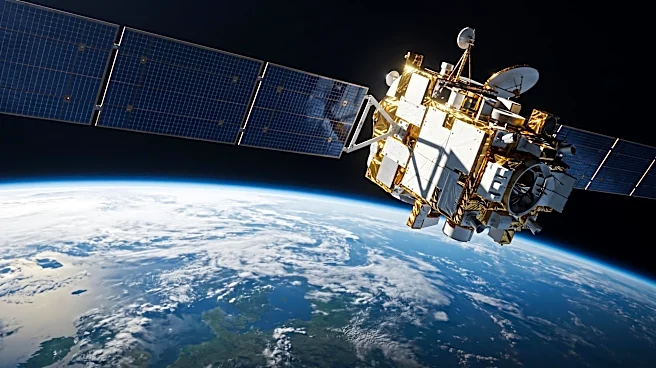
Redwire Corp (NYSE: RDW) has been awarded a contract by Axiom Space to design and supply two Roll-Out Solar Array (ROSA) wings for the second module of the Axiom Station. This new contract expands Redwire's existing involvement, as the company is already
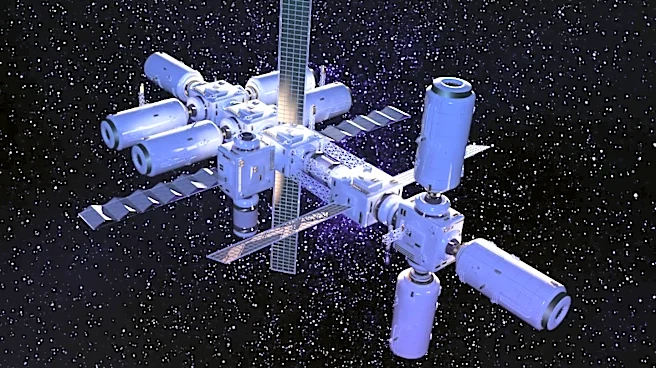
producing ROSA wings for Axiom Station's first module. The first module is currently in final assembly in Turin, Italy, and is scheduled for launch in 2028 from Kennedy Space Center. The second module is expected to launch shortly after the first. Together, these two modules are designed to create an operational, free-flying space station capable of supporting a four-person crew. Redwire's ROSA technology is crucial for generating electricity in space, as it allows solar panels to be compact during launch and large once deployed. This technology has already been proven in orbit, with variants deployed on the International Space Station to augment its power system.
Why It's Important?
This contract highlights Redwire's growing role in the commercial space infrastructure market and underscores the critical importance of power systems for the emerging commercial space economy. As low Earth orbit becomes increasingly commercialized, reliable electricity will be a fundamental requirement for various activities, including microgravity research, product development, manufacturing, and human spaceflight. The ability to provide robust power infrastructure, such as Redwire's ROSA technology, will directly influence the capacity and capabilities of commercial space stations. This development signifies a shift towards an 'orbital utilities' model, where specialized suppliers provide essential services like power, thermal management, and communications to multiple space platforms. This approach allows companies like Redwire to participate in the growth of the space economy without necessarily operating their own stations, akin to the 'picks and shovels' model in other industries.
What's Next?
The first module of the Axiom Station is slated for launch in 2028 from Kennedy Space Center, with the second module, now equipped with Redwire's ROSA wings, expected to follow shortly thereafter. Once both modules are in orbit, they will form a fully operational, free-flying space station designed to support a four-person crew. This will enable Axiom Space to advance its plans for microgravity research, product development, manufacturing, and human spaceflight activities for various international and commercial customers. Redwire is also positioning its power technology for future lunar and Mars exploration missions, as well as emerging orbital data-center projects, indicating a broader strategic vision for its role in the evolving space sector. The continued development and deployment of such critical infrastructure will be key to the expansion and monetization of the commercial space economy.
Beyond the Headlines
The Redwire-Axiom contract reveals a deeper implication for the commercial space economy: the necessity of robust, reliable infrastructure beyond just rockets and stations. Electricity, often overlooked in the broader narrative of space exploration, is the fundamental 'currency' of an orbital platform, powering everything from life support and communications to scientific equipment and commercial payloads. This emphasis on orbital utilities suggests a future where access to space will involve purchasing a comprehensive package of services, not just a ride or a destination. The development of specialized suppliers for these utilities, like Redwire for power, creates a more resilient and diversified space ecosystem. This model could mitigate risks for investors by allowing them to support the foundational elements of space commerce rather than betting solely on the success of individual station operators, fostering a more sustainable and economically viable presence in low Earth orbit.