






What's Happening?
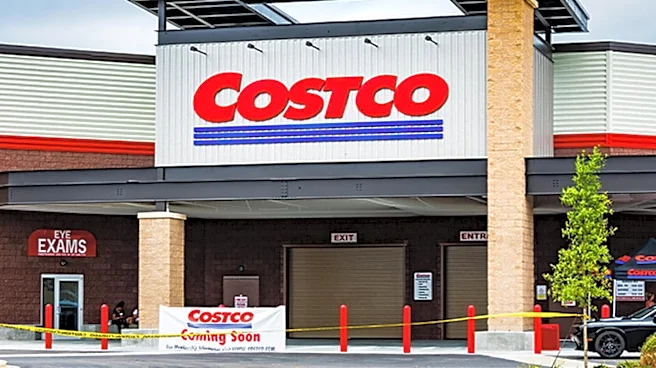
Costco is developing its first integrated apartment complex in Los Angeles, California's Baldwin Hills neighborhood. This project, led by developer Thrive Living, will feature a 192,000-square-foot Costco store on the ground floor with 918 residential
units above it. Construction began in September 2024, starting with four levels of underground parking before progressing to the retail space and prefabricated modular apartments. Most of the apartments, 914 units, are designated for low-income residents earning up to 80% of the area median income, with the remaining four for building managers. The commercial rent from Costco is intended to financially subsidize these residential units. The Los Angeles Department of City Planning is still reviewing Thrive Living's recent filing to add 118 apartments to the previously approved 800-unit complex. The new Costco location will include a fresh produce area, pharmacy, optical services, and delivery services, but will not have a gas station. This development is part of Costco's broader expansion strategy, as CEO Ron Vachris announced plans to open 33 new warehouses in fiscal year 2027, with 28 being net new openings after accounting for five relocations. New U.S. markets targeted for growth include Buffalo, New York, and Lawrence, Kansas.
Why It's Important?
This innovative Costco development in Los Angeles signifies a potential shift in urban retail and housing models, particularly in high-cost areas. By integrating a major retail anchor with subsidized housing, the project aims to address both commercial and residential needs simultaneously. This model could provide a template for future mixed-use developments, offering affordable housing options while ensuring a steady revenue stream for developers through commercial leases. For Costco, this venture represents an expansion into a new format that could enhance its market presence and community integration, especially in densely populated urban environments where traditional standalone warehouse models might be challenging. The focus on low-income housing also aligns with growing demands for corporate involvement in community welfare and affordable living solutions. Furthermore, Costco's broader expansion plans, including new markets like Buffalo and Lawrence, indicate continued confidence in its growth strategy and the potential for increased economic activity and job creation in these regions. The success of this Los Angeles project could influence how large retailers approach urban development and community engagement in the future.
What's Next?
The immediate next step for the Los Angeles project involves securing final approval from the Los Angeles Department of City Planning for the expanded apartment count, which could impact the targeted 2027 opening timeline. Construction will continue on the five-acre plot, progressing from the underground parking to the Costco store and then the modular apartments. For Costco as a whole, the company will proceed with its plan to open 33 new warehouses in fiscal year 2027, including the 28 net new locations and five relocations. This expansion will involve site selections, construction, and staffing in new U.S. markets such as Buffalo, New York, and Lawrence, Kansas. The performance of this integrated retail-residential model in Los Angeles will likely be closely watched by other developers and retailers, potentially influencing future urban planning and mixed-use development strategies across the country. Stakeholders, including local residents, housing advocates, and urban planners, will be observing the project's impact on housing affordability and community development.
Beyond the Headlines
This project goes beyond a typical retail development by integrating a major commercial entity with a significant affordable housing component, potentially setting a precedent for how large-scale retail can contribute to urban housing solutions. The model of using commercial rent to subsidize residential units addresses a critical societal need for affordable housing, particularly in expensive urban centers like Los Angeles. This could spark broader discussions about corporate responsibility in addressing housing crises and the potential for innovative public-private partnerships in urban development. Ethically, it raises questions about the role of large corporations in community planning and social welfare, moving beyond purely commercial interests. Legally, the project's approval process and the integration of low-income housing units within a commercial development could influence zoning laws and urban planning regulations. Culturally, it represents a shift in how communities might perceive and interact with large retailers, transforming them from mere shopping destinations into integral parts of residential living spaces. This development could also trigger long-term shifts in urban design, promoting more mixed-use, walkable communities where daily needs are met within a single complex, reducing reliance on transportation and fostering a more integrated urban lifestyle.