




What's Happening?
India's smartphone market is experiencing its first annual revenue decline, driven by a global shortage of memory chips. This shortage has led to a significant increase in handset prices, subsequently reducing demand. Shipments fell by 3% year-on-year
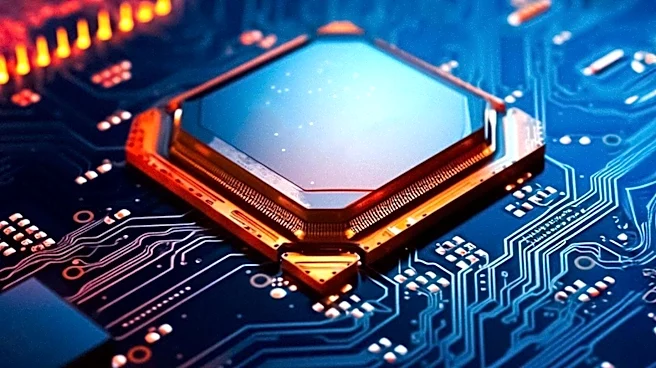
in Q1 2026, 10-11% in Q2, and 20-23% in Q3, marking the steepest quarterly drop since Q4 2022. The average selling price (ASP) of smartphones rose to a record $371 in Q3, a 26.1% increase, but this was insufficient to offset the decline in volume, resulting in a 3.3% drop in market value. Chipmakers have shifted production capacity towards high-performance memory for AI servers, causing a scarcity of consumer-grade DRAM and NAND. This has led to mobile memory prices jumping over 50% for DRAM and over 90% for NAND in Q1 2026, and an 80% rise in smartphone memory prices in Q2. Memory now constitutes 30-40% of a typical smartphone's bill of materials, up from 10-15%.
Why It's Important?
The downturn in India's smartphone market, a significant global mobile market, signals a broader impact of the memory chip shortage on consumer electronics. The forced 'premiumization' of the market, where entry-level phones are becoming unaffordable, is pushing out first-time and budget buyers. This shift is evident in the 90.9% fall in shipments of sub-$100 phones in Q3. While brands with diverse portfolios like Samsung are managing better, those dependent on single price categories are struggling. The increased reliance on credit for smartphone purchases, with NBFC and card EMIs accounting for over 50% of mainline sales in Q2 2026, indicates a strain on consumer affordability. This trend could lead to a larger market for used and refurbished phones, as new entry-level devices become less accessible. The situation also affects telecom operators, as slower adoption of 5G handsets due to higher prices could hinder data usage and ARPU growth, impacting their revenue streams.
What's Next?
The outlook for India's smartphone market remains challenging, with IDC forecasting 2026 volumes to be 16-18% below 2025, and Counterpoint predicting a 13% contraction. Recovery is not expected before 2028. Smartphone memory prices are projected to continue rising, with a 5% increase expected in Q4. Conventional DRAM contract prices are forecast to rise 10-15% in Q4 2026, and NAND 15-20%. Another round of handset price increases is anticipated after the festive sales. Some entry-level brands are resorting to recycled memory to cut costs. The PC market is following a similar trajectory, with tight memory supply expected to last at least another year, making device refresh cycles more expensive for businesses. This ongoing shortage and price escalation will likely continue to reshape the consumer electronics landscape, favoring higher-end models and potentially increasing the digital divide.
Beyond the Headlines
The current memory chip shortage highlights a critical vulnerability in the global supply chain, where the prioritization of high-performance memory for AI servers is inadvertently impacting the accessibility of essential consumer technology. This shift underscores the growing influence of AI development on broader technological markets. The 'forced premiumization' in India's smartphone market could exacerbate economic inequalities, as lower-income individuals are priced out of new smartphone ownership, potentially limiting their access to digital services and opportunities. The increased reliance on financing for smartphone purchases also raises concerns about consumer debt and financial stability. This situation could accelerate the adoption of circular economy practices, such as the use of recycled components and a stronger market for refurbished devices, as manufacturers and consumers seek more affordable and sustainable alternatives.