






What's Happening?
Third Point, a prominent institutional investor, has revealed a 54,000-share position in Core Scientific in its Q2 13F filing. This investment signals a growing trend where Bitcoin mining companies are being re-evaluated not just as leveraged proxies
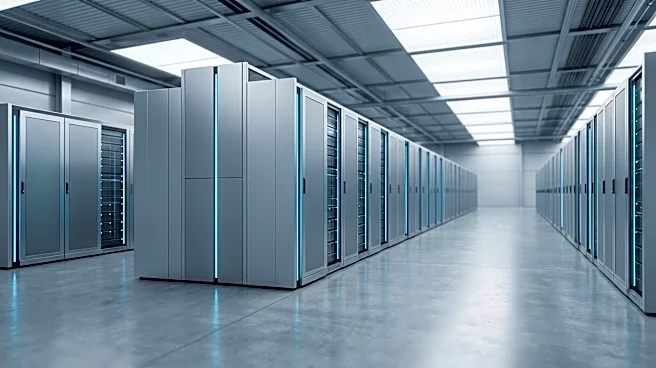
for Bitcoin, but as infrastructure assets capable of supporting artificial intelligence (AI) operations. Core Scientific, a company that built its identity around Bitcoin mining infrastructure, is now part of a broader market discussion concerning high-performance computing, data centers, and the increasing demand for AI compute platforms. This move by Third Point underscores the evolving perception of the Bitcoin mining sector, suggesting that institutional capital is exploring how existing mining infrastructure can be repurposed for the next generation of computing needs, particularly in AI.
Why It's Important?
This development is significant because it indicates a potential revaluation of Bitcoin mining equities within the financial markets. Historically, these companies have been subject to the volatility of Bitcoin prices, energy costs, and halving pressures. However, the shift towards AI hosting offers a new, potentially more stable business line that is less directly tied to Bitcoin's price fluctuations. For traditional investors, this means that mining stocks could become more attractive, even if they are not directly investing in cryptocurrencies. The ability of these companies to leverage their existing large-scale energy and data-center infrastructure for AI compute pivots positions them as key players in the burgeoning AI boom, which demands substantial power, cooling, and high-density facilities. This could lead to a broader investor base and more diversified revenue streams for these firms.
What's Next?
The future trajectory for Core Scientific and similar Bitcoin miners will depend on their ability to successfully execute this pivot towards AI infrastructure. While the AI narrative is attractive, these companies must demonstrate that their computing assets can attract customers and generate significant recurring AI revenue. This involves securing long-term compute or data-center contracts, which could make their valuations less dependent on Bitcoin production alone. Investors will be closely watching for tangible evidence of this transition, such as new contracts, operational efficiencies in AI hosting, and improved financial performance from their AI-related ventures. The success of this pivot could lead to these companies being compared more with traditional infrastructure or data-center firms rather than solely with other Bitcoin miners, potentially attracting further institutional investment.
Beyond the Headlines
The deeper implication of Third Point's investment is the recognition of the inherent value in the physical infrastructure developed by Bitcoin miners. These companies have already invested heavily in large-scale energy and data-center facilities, which are now proving to be highly adaptable to the demands of AI workloads. This highlights a broader trend where specialized infrastructure built for one purpose can find new utility in rapidly evolving technological landscapes. It also raises questions about the long-term sustainability and diversification strategies for companies operating in volatile sectors like cryptocurrency mining. The ethical and strategic considerations involve balancing the environmental impact of energy-intensive operations with the economic benefits of supporting cutting-edge AI development, and how these companies can navigate the transition to ensure both profitability and responsible growth.