


What's Happening?
The term 'armarium,' originally a Roman cupboard for storing various household goods, has evolved significantly over centuries. In medieval Europe, it transformed into a storage cabinet specifically for weapons, giving rise to the French term 'armoire.'
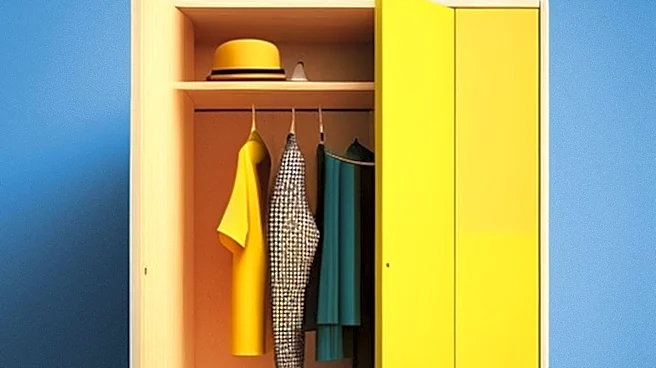
By the 17th and 18th centuries, this piece of furniture became the primary bedroom wardrobe format in aristocratic European homes, characterized by its tall, ornately carved design with interior fittings for hanging and folding clothes. Concurrently, in regions like Rajasthan, a parallel tradition known as the 'almirah' developed, featuring distinctive carved motifs influenced by Mughal and Indo-Islamic architectural styles, such as mandalas, lotuses, and peacocks. Today, the hand-carved armoire wardrobe continues this rich lineage, blending European freestanding wardrobe functionality with traditional Rajasthani craftsmanship. Modern armoires are typically freestanding cabinets with two doors, combining hanging rods, fixed shelves, and often drawers, offering a versatile storage solution that can be moved and repositioned, unlike built-in wardrobes.
Why It's Important?
The enduring legacy of the armoire highlights the continuous evolution of furniture design and its adaptation to changing societal needs and aesthetic preferences. For consumers, understanding this history provides context for the value and craftsmanship of hand-carved armoires, distinguishing them from mass-produced alternatives. The blend of European and Indo-Islamic design traditions in contemporary armoires offers a unique aesthetic appeal, catering to diverse interior design styles from farmhouse to bohemian. The functional advantages of armoires, such as integrated hanging space, shelves, and drawers, address practical storage needs in bedrooms, potentially reducing the need for multiple furniture pieces. This historical perspective also underscores the importance of solid wood construction, which contributes to the longevity and character of an armoire, making it a significant investment piece that gains value and patina over time, rather than deteriorating like furniture made from engineered wood.
What's Next?
The market for hand-carved armoires is likely to continue catering to consumers seeking unique, high-quality furniture with historical depth and artistic value. Manufacturers and artisans may further explore customizable options, allowing buyers to specify dimensions, finishes, interior configurations, and carved motifs to suit individual preferences and interior design schemes. The integration of traditional craftsmanship with modern design sensibilities could lead to new interpretations of the armoire, ensuring its relevance in contemporary homes. Interior designers, particularly those involved in client projects, will continue to leverage trade programs that offer direct artisan pricing and customization services, facilitating the inclusion of these distinctive pieces in diverse residential and commercial settings. The emphasis on solid wood construction and artisanal techniques suggests a sustained demand for durable, aesthetically rich furniture that stands apart from conventional mass-produced items.
Beyond the Headlines
The armoire's journey from a functional Roman storage unit to a sophisticated bedroom wardrobe reflects broader cultural shifts in domestic living and the appreciation of craftsmanship. Its evolution from military storage to an ornate piece of furniture for aristocratic homes signifies a transition in societal values, where utility merged with artistry and status. The parallel development of the 'almirah' in Rajasthan underscores the global interconnectedness of design traditions and the cross-cultural exchange of artistic motifs and construction techniques. This historical narrative also highlights the intrinsic value of furniture as more than just utilitarian objects; armoires, particularly hand-carved ones, become statement pieces that imbue a room with character and history. The choice of a solid wood armoire over a flat-pack wardrobe represents a conscious decision towards sustainability and an investment in pieces that are built to last, challenging the disposable nature of much modern consumer goods and fostering an appreciation for enduring quality and heritage.