




What's Happening?
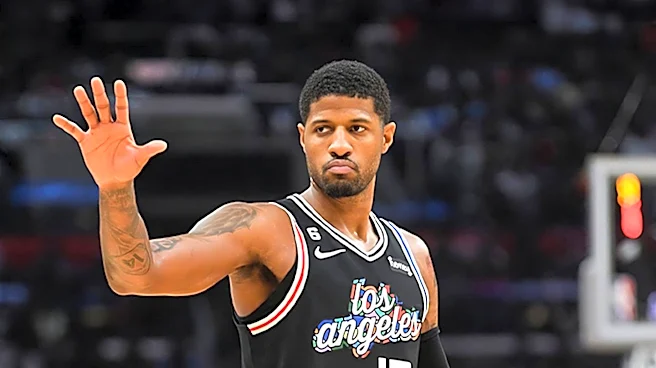
The Boston Celtics are set to gain increased flexibility in potential trade negotiations involving Paul George as a restriction preventing the aggregation of his salary with other contracts expires this week. George, a nine-time All-Star, was acquired
by the Celtics from the Philadelphia 76ers in July. While the Celtics could have traded George immediately after his acquisition, NBA rules temporarily prohibited them from combining his salary with other player contracts in a trade for two months. This restriction, which began when the trade became official on July 6, is scheduled to lift on September 6. This development provides the Celtics' front office with more options to maneuver before the trade deadline, should they decide to utilize George's contract to enhance their roster. Despite this newfound flexibility, there is no credible reporting suggesting the Celtics are actively looking to trade George, and Celtics president of basketball operations Brad Stevens has spoken positively about George's fit with the team.
Why It's Important?
This expiring restriction is significant for the Boston Celtics as it broadens their strategic options for roster management. By being able to aggregate Paul George's substantial salary, which includes $54.1 million in 2026-27 and a $56.6 million player option for 2027-28, the Celtics can pursue more complex and impactful trades. This flexibility is crucial in the competitive landscape of the NBA, where salary matching is often a key component of major transactions. While the team's leadership has expressed satisfaction with George, his age (36) and large contract place him on a different timeline than younger stars like Jayson Tatum (28). The ability to include George's contract in a larger trade package could allow the Celtics to acquire other high-value players or multiple assets, potentially addressing future needs or strengthening their championship contention window. This move could also impact other teams in the league, as the Celtics' increased trade power might shift dynamics in player movement discussions.
What's Next?
Starting September 6, the Boston Celtics will have the option to aggregate Paul George's salary with other contracts in potential trades. This does not necessarily mean an immediate trade is imminent, but it opens up possibilities for the front office between now and the trade deadline. The Celtics will likely continue to evaluate their roster and explore opportunities to improve the team. While Celtics president Brad Stevens has publicly praised George's contributions and fit, the financial implications of George's contract, particularly his player option for the 2027-28 season when he will be 38, could lead the team to explore trade scenarios in the coming years. Any future trade involving George would depend on the team's performance, emergent needs, and the availability of suitable trade partners. The lifting of this restriction simply provides the Celtics with a valuable tool in their long-term strategic planning.
Beyond the Headlines
The lifting of the salary aggregation restriction for Paul George highlights the intricate financial and contractual complexities that govern player movement in the NBA. Beyond the immediate tactical advantage for the Celtics, this situation underscores how collective bargaining agreement (CBA) rules can significantly influence team building and player careers. The temporary restriction on aggregating salaries, designed to prevent immediate 'flip' trades, demonstrates the league's efforts to maintain competitive balance and stability. For players, these contractual nuances can dictate their market value and future team placements, even for established stars like George. The ongoing management of large contracts and the strategic use of trade exceptions and salary aggregation are critical components of modern NBA front office operations, often leading to less obvious but profound impacts on team composition and league-wide talent distribution. This event also subtly reflects the constant tension between short-term competitive gains and long-term financial sustainability for NBA franchises.