




What's Happening?
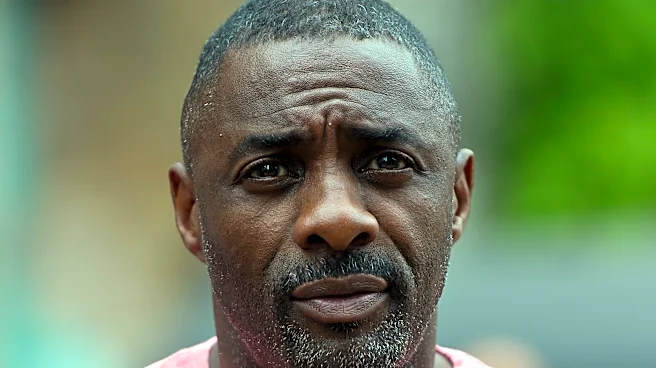
Thirteen years ago, actor Idris Elba experienced a profound personal tragedy while at the height of his career, as detailed by Far Out Magazine. During a period when he was gaining significant recognition in Europe and America through his role in the detective
series 'Luther' and appearing in blockbusters like Marvel's 'Thor' and Ridley Scott's 'Prometheus,' Elba's father, Winston, was battling advanced lung cancer. To afford the best medical care for his father, Elba accepted various film projects, including the action thriller 'The Gunman.' While filming 'The Gunman,' which required extensive travel, Elba received news of his father's deteriorating condition and returned to the United Kingdom. He recounted to GQ that his father opened his eyes and looked directly at him in his final moments. Following his father's death, Elba requested time off from the production of 'The Gunman' but was denied and instructed to return to set immediately. The first scene he was required to film upon his return was a funeral scene, which he described as an incredibly difficult experience.
Why It's Important?
This event highlights the immense pressures and often unforgiving nature of the entertainment industry, even for highly successful actors. Elba's experience underscores the conflict between personal grief and professional obligations, revealing how the demands of film production can override an individual's need for time to mourn. The decision by the film's production to deny Elba leave and then require him to perform a funeral scene immediately after his father's death raises questions about industry practices regarding actor welfare and mental health. While Elba's career continued to flourish, with roles in 'Avengers: Age of Ultron' and 'Beasts of No Nation' that same year, the personal toll of such an experience can be significant and long-lasting. This situation sheds light on the human cost behind the glamour of Hollywood and the potential for exploitation of artists under contract, even when facing profound personal loss.
What's Next?
While this specific event occurred thirteen years ago, its retelling serves as a reminder of the ongoing discussions within the entertainment industry regarding mental health support and more humane working conditions for actors and crew members. Industry organizations and unions may continue to advocate for policies that provide adequate bereavement leave and support systems for individuals facing personal crises. For Elba, this experience marked a turning point, influencing his perspective on life and career. He continues to have a busy schedule with upcoming projects, including new installments of 'Luther' for Netflix, 'Extraction 3,' and an adaptation of 'Children of Blood and Bone.' The broader industry conversation will likely persist, focusing on how to balance demanding production schedules with the personal well-being of those involved in filmmaking.
Beyond the Headlines
Elba's account delves into the ethical considerations of demanding professional performance during periods of intense personal grief. The incident underscores a broader cultural expectation in some professional environments to compartmentalize personal suffering for the sake of work, which can have detrimental effects on mental and emotional health. The commercial failure of 'The Gunman,' which lost nearly $20 million and received poor reviews, juxtaposed with Elba's subsequent successes, suggests that forcing an actor through such a traumatic experience did not ultimately benefit the film's quality or financial outcome. This raises questions about the long-term efficacy and morality of prioritizing production schedules over human empathy. The story also highlights the resilience of individuals like Elba, who can navigate profound personal loss while maintaining a high-profile career, but it also calls for a re-evaluation of industry standards to prevent similar situations.